
 Moderation Team
The government has launched a consultation on the standards that will govern the future use of autonomous vehicles on Britain’s roads, as ministers move a step closer to allowing the technology to operate more widely.
The consultation, which runs until 9 September, seeks views on a draft statement of safety principles that would be used to decide whether a self-driving vehicle can be authorised for use on public roads.
Under the proposals, autonomous vehicles would be expected to comply with traffic laws and the Highway Code, respond appropriately to hazards, adapt to road and weather conditions, interact safely with other road users and emergency services, and operate only within the limits for which they have been designed. The government says self-driving vehicles should perform at a level equivalent to a “careful and competent” human driver.
Ministers argue the technology could improve road safety, increase mobility for older and disabled people, and create thousands of skilled jobs. The Department for Transport points to the fact that human error currently contributes to 88% of reported road collisions.
Testing the technology in Suffolk
While the consultation looks to the future, parts of East Anglia are already experimenting with autonomous transport.
In February, residents in Mildenhall were invited to ride in a self-driving shuttle bus as part of a Suffolk County Council trial. According to BBC News, the authority is exploring how autonomous vehicles could be used alongside existing transport services, particularly in locations where conventional bus routes are difficult to sustain.
The council has been working with partners on a feasibility study examining how driverless shuttle buses could connect communities with town centres, transport hubs and other services. The prototype vehicle demonstrated in Suffolk was designed to operate without a steering wheel or driver’s seat, although a safety operator remained on board and speeds were restricted during the trial.
Speaking to the BBC at the time, Suffolk County Council’s head of transport strategy, Graeme Mateer, said the aim was not to replace conventional buses but to explore whether autonomous services could fill gaps in the network where regular routes are not commercially viable.
Cambridge trials continue
Cambridgeshire is also becoming a significant testing ground for autonomous transport.
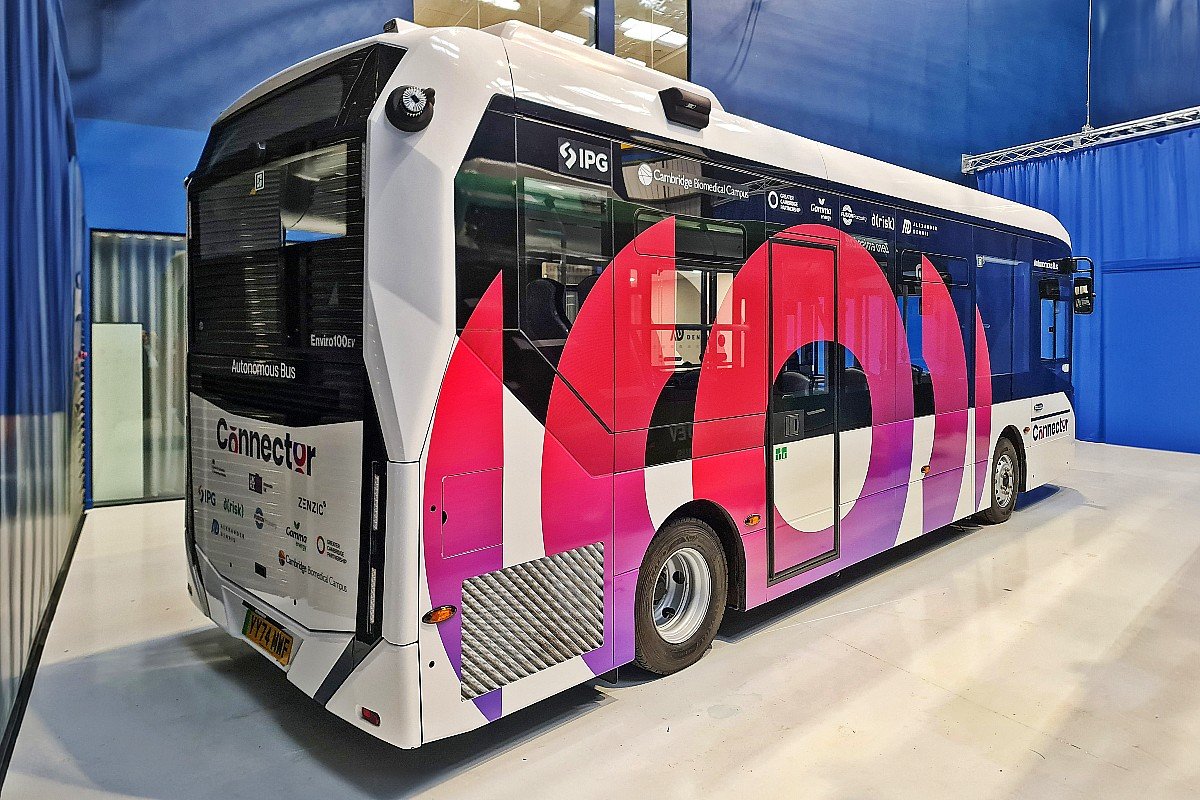
In March, BBC News reported that Cambridge was “closer to the commercial deployment” of driverless buses than any other city in the UK. Autonomous 15-seat buses have already been carrying passengers around parts of the city as part of an ongoing trial involving routes linking innovation and research sites.
The vehicles use cameras and external sensors to navigate and stop if they encounter obstacles. A safety monitor remains on board while the technology is tested.
Supporters believe autonomous vehicles could help operators run services for longer hours and on routes that might otherwise be uneconomic. However, the trials have also highlighted practical questions around accessibility, passenger confidence and the management of incidents involving the vehicles.
More recently, the Wellcome Genome Campus near Cambridge announced plans for a year-long study into how self-driving vehicles could be used to connect the site with nearby Whittlesford Parkway railway station. The project will examine whether autonomous transport could reduce congestion and improve access for workers travelling to the campus.
Consultation seeks public views
The government’s consultation asks members of the public, local authorities, road safety organisations, accessibility groups and industry representatives for their views on the proposed safety standards.
Among the questions being asked are whether autonomous vehicles should be judged against the standard of a careful and competent human driver, whether the proposed safety principles are sufficient, and how the performance of self-driving vehicles should be monitored once they are operating on public roads.
Roads and Buses Minister Simon Lightwood said self-driving vehicles could help support independent travel for older adults and disabled people while contributing to economic growth and creating high-skilled jobs.
The consultation closes on 9 September, with responses helping to shape the permanent rules that will govern the future rollout of self-driving vehicles across Great Britain.
This article is based on a government press release, compiled with assistance from AI tools and edited by East Anglia Bylines.


GIPHY App Key not set. Please check settings