
 Moderation Team
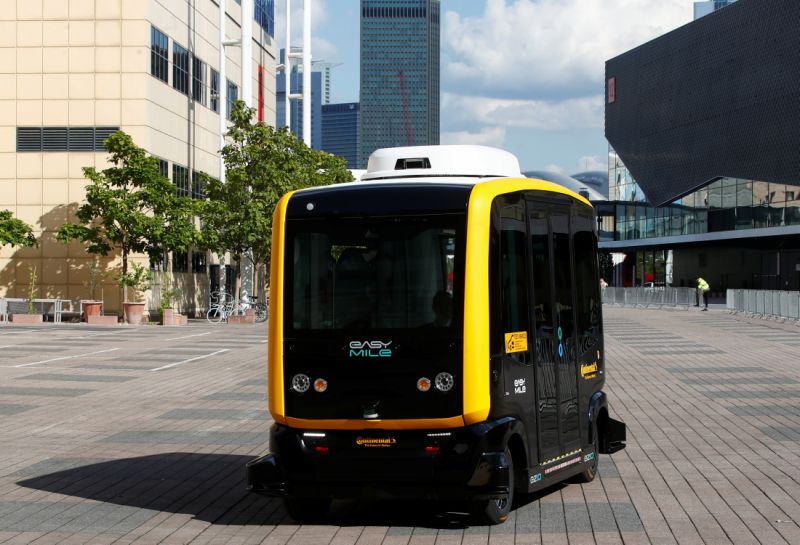
Germany’s Ministry of Transport is moving ahead to draft legislation that would allow driverless vehicles to operate on the streets, not just in special test areas, as is currently the case.
In a draft document seen by Reuters news agency, the transport ministry writes that “initially, driverless vehicles should be able to be deployed in defined operating zones,” which would give municipalities completely new opportunities for public transport.
The paper notes that in urban areas, driverless vehicles could potentially be used for deliveries, services, as shuttle services for company staff, or to transport people between medical centres and nursing homes.
Creating binding legal regulations around autonomous driving, which currently don’t really exist, is the next big step. One aspect would be what technical specifications the autonomous vehicles need to adhere to, as well as rules on where they can operate.
Overall, however, the transport ministry believes that driverless cars will be safer on the roads than those driven by people, noting that “the vast majority of all traffic accidents in Germany are based on human error.”
Chancellor Angela Merkel said in early September that Germany should take a “pioneering” role in autonomous driving.
She agreed during a meeting with the country’s automotive leaders that a law would be drafted, to enable Germany to be the “first country in the world to permit driverless vehicles in regular operation” across the whole country.
During the meeting, a goal was set to get autonomous cars onto the regular roads from 2022.
In June this year, around 50 countries, including EU member states, and Asian and African countries signed up to developing common regulations for autonomous cars. The UN Economic Commission for Europe said in a statement that this is “the first binding international regulation on so-called Level 3 vehicle automation.”
Level 3 is when driver-assist systems, like lane-keeping, are deployed but the driver needs to be prepared to take over at any time. Full automation is level five.
Source: sports.yahoo.com
GIPHY App Key not set. Please check settings