

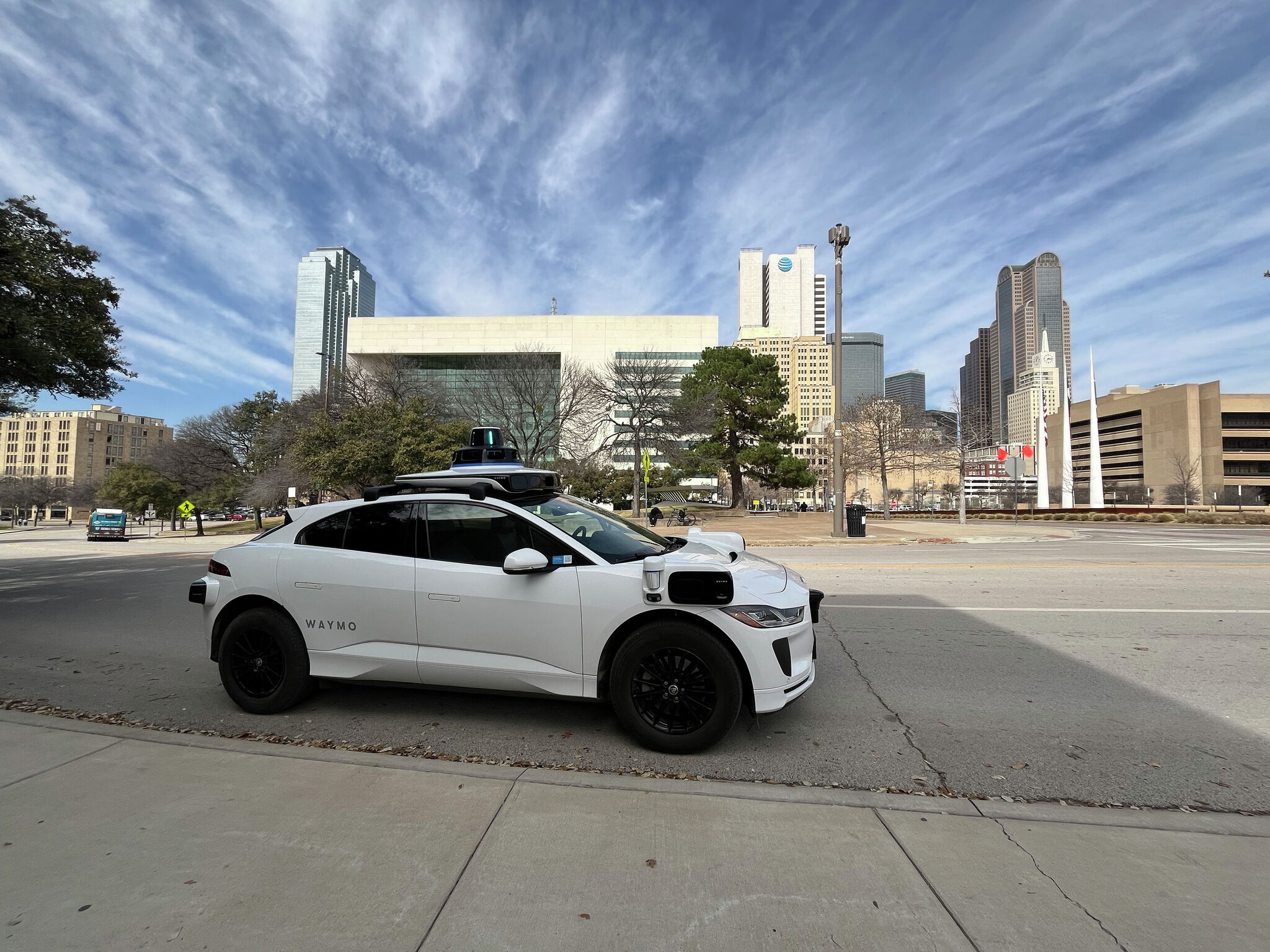
You may have noticed Waymo’s driverless cars zipping around town again. We are glad the robotaxis are back on the road and excited about the opportunities self-driving cars can bring to the region. We need to continue experimenting with this technology with guardrails in place.
For the most part, Waymo drives like your grandma or a nervous high school student who just got their learner’s permit. However, there have been instances of Waymos doing some odd things, and they shouldn’t be brushed off as flukes.
Severe thunderstorms earlier this month caused several roadways to flood. A Dallas resident took a video of a Waymo stuck in high water at an intersection. Other videos on social media over the last few weeks have captured Waymo cars stalled on the road with their hazards flashing, backing up traffic because they refuse to pull into an intersection to make a turn or having trouble navigating construction zones.
These are some examples of the kinds of kinks Waymo has to work out.
And that’s not to say there aren’t bigger issues with self-driving cars. This month, a driver in a Tesla vehicle crashed into a house in Katy, Texas, and killed a woman inside. A Tesla official said the driver overrode the self-driving mode when the car crashed. It’s unlikely that incidents like these will ever decline to zero, but humans behind the wheel who drive drunk, distracted or recklessly are the greatest danger on the road and cause thousands of deaths each year.
At the end of May, Waymo said it was pausing its robotaxi service in Dallas and some other cities due to concerns about driving in bad weather. A Waymo spokesperson told us the company monitors weather reports and can temporarily pause the vehicles and return them to their depots during severe weather. Riders are informed through app notifications when service is unavailable.
It’s good that Waymo is continuously monitoring and updating service. This is the kind of oversight we need.
And there have been some surprising benefits to the robotaxis. The New York Times recently reported that blind users who can’t drive appreciate the independence Waymo gives them. We expect Waymos could serve people with many different disabilities, including those who use service animals, or people who don’t have reliable access to a car or other forms of transportation.
As the metro area continues to expand, we need to keep thinking creatively about transportation, and Waymo is part of that conversation.
And for the most part, Waymo is safer than human drivers. Waymo’s most recent safety data, published in June, found that compared to an average human driver in its operating cities, Waymo had fewer serious injury or worse crashes.
Driving in Dallas-Fort Worth is downright dangerous, from street racing to simply encountering too many careless drivers. Waymo isn’t perfect, but as technology advances and the cars get more familiar on the roads, Waymo as well as other self-driving options should get cheaper, safer and expand transportation for all.