

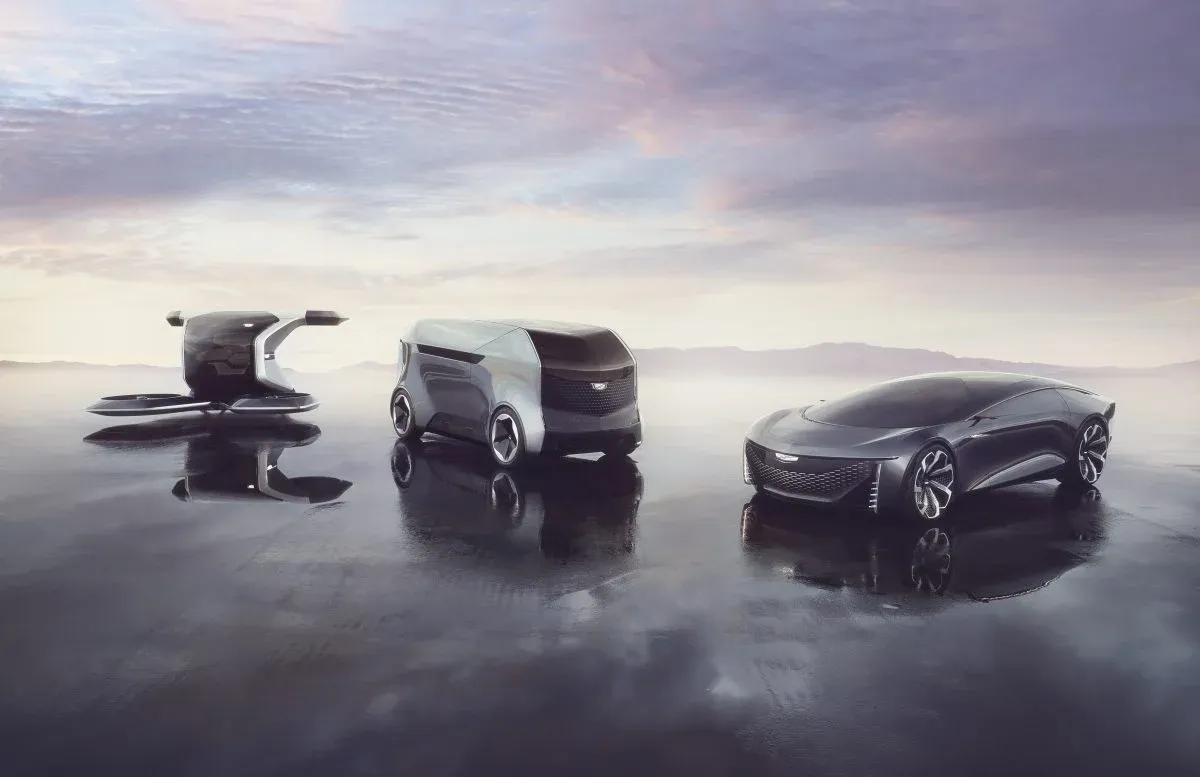
Cadillac Halo, a Futuristic, Fully Autonomous Flying Car Concept. Source: General Motors
General Motors (GM) used its virtual keynote at CES 2021 to place a very Cadillac-shaped marker on the future of personal mobility, a set of high-concept vehicles grouped under a “Halo” portfolio that included a single-seat electric vertical-takeoff-and-landing (eVTOL) aircraft and a driverless ground shuttle. The reveal was explicitly a design and idea statement, a look at how Cadillac imagines luxury, autonomy, and aerial mobility could be incorporated together in a multimodal future.
The Halo Portfolio: A Glimpse Into Cadillac’s Visionary Lineup
At CES 2021, General Motors introduced its Cadillac Halo Portfolio, a collection of forward-looking design studies that reimagine how luxury, autonomy, and electric mobility might converge in the future. The lineup centered around two striking concepts, one airborne and one ground-based, each crafted to explore different facets of next-generation travel:
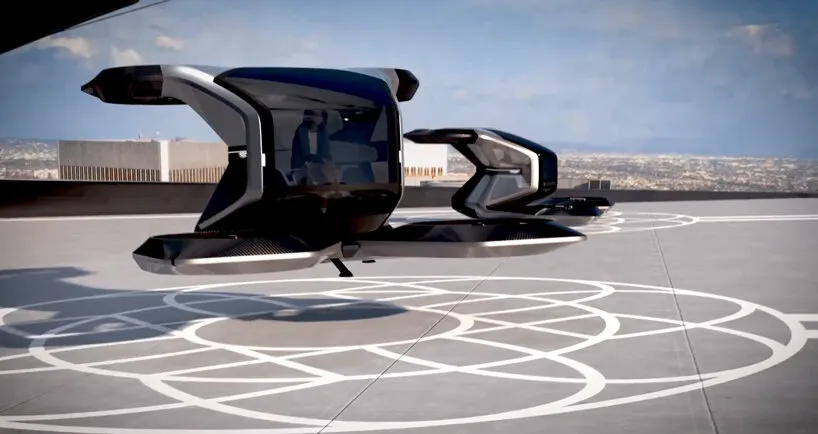
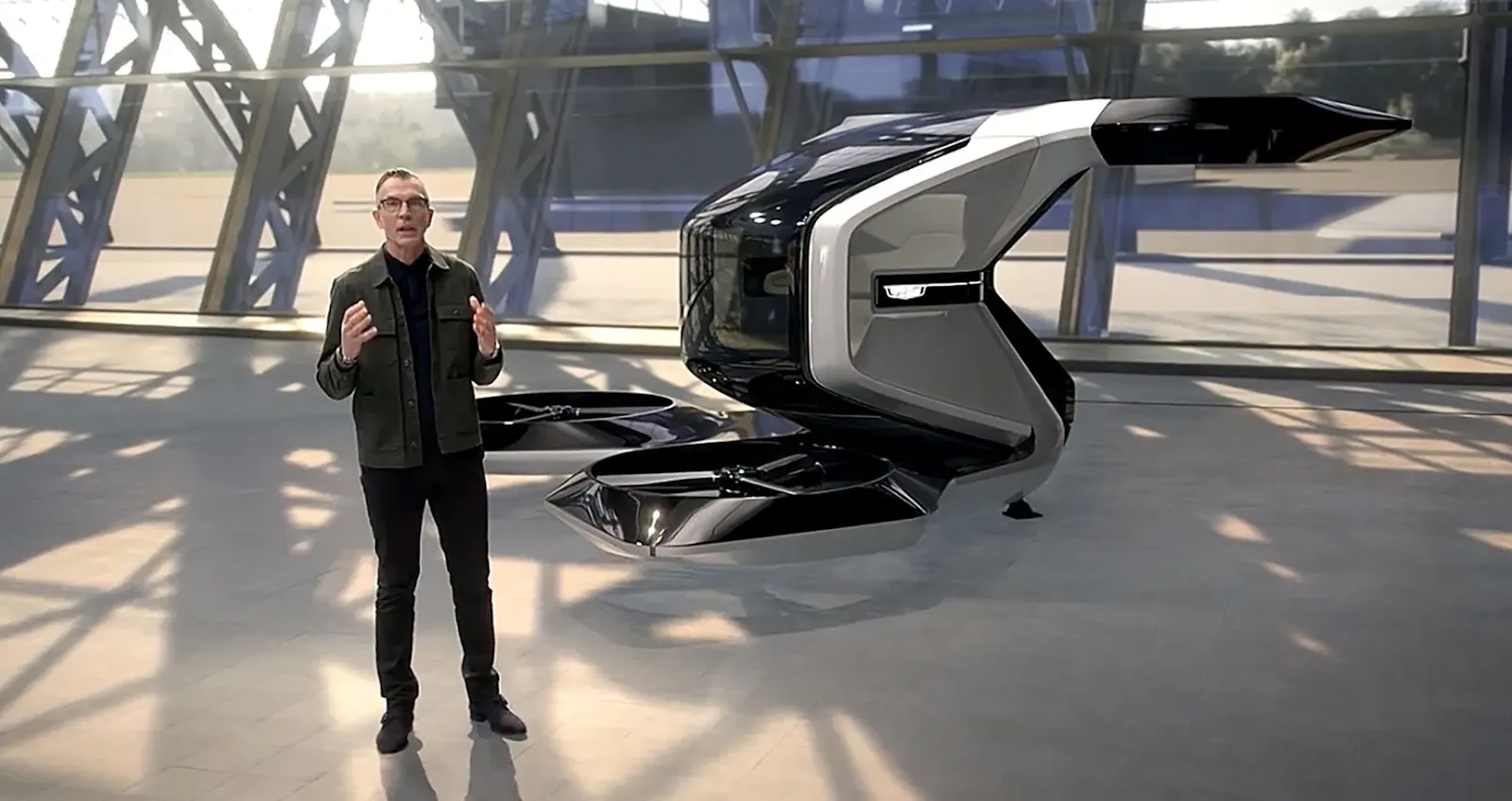
- PersonalSpace: a sleek, single-occupant electric vertical takeoff and landing (eVTOL) aircraft designed to offer swift, autonomous air travel across dense urban environments.
- SocialSpace: a fully autonomous luxury shuttle conceived as a shared “living room on wheels,” prioritizing comfort, connectivity, and communal experience over conventional driving.

GM described the Halo series as a creative exploration and an embodiment of Cadillac’s evolving identity in an era defined by electrification, intelligent systems, and seamless multimodal transportation.
Design & exterior: a Cadillac personality in the sky
The eVTOL’s visuals are a Cadillac lounge lifted into the air, a compact, heavily glazed cabin that maximizes forward and downward views, soft yet sculpted surfacing, and four propulsors (two fore, two aft in the concept imagery) that enable vertical lift. The shuttle follows Cadillac’s current design language with a boxier “social pod” profile, large glass roof panels, and sliding door concepts intended for easy entry and a communal interior layout. The reveal relied heavily on renderings and animation rather than a working prototype.

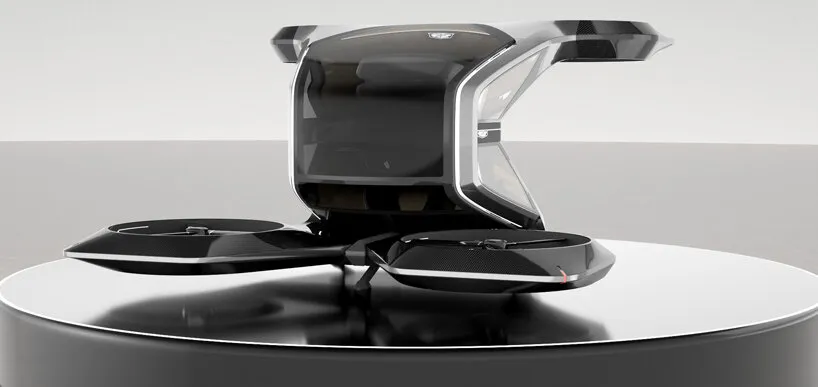
General Motors has disclosed only limited technical information about the flying Cadillac concept. Based on the company’s CES presentation, the PersonalSpace eVTOL is depicted with four rotors that enable vertical takeoff and landing, reflecting a compact, drone-like configuration designed for single-passenger travel.

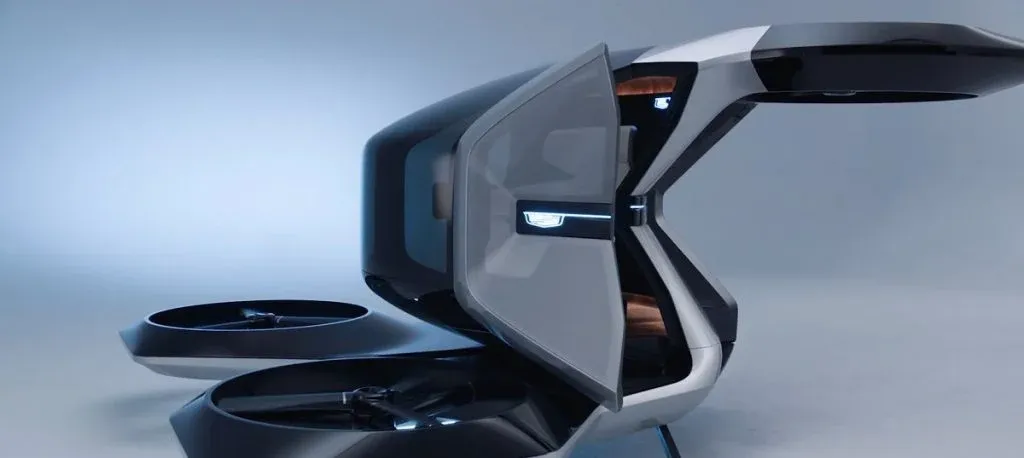

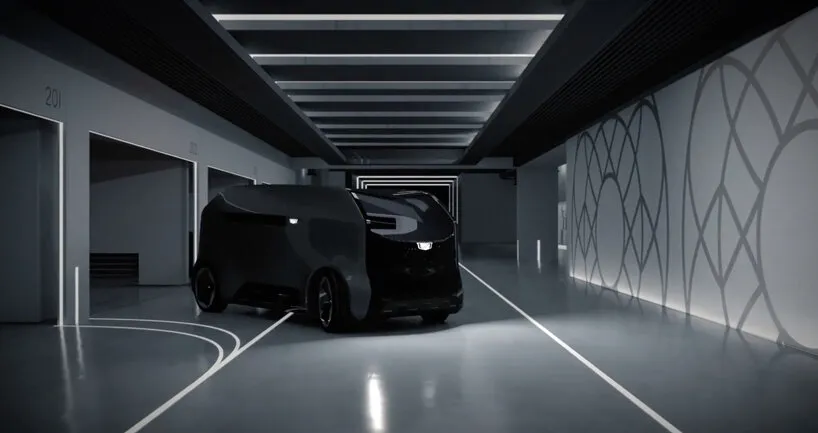
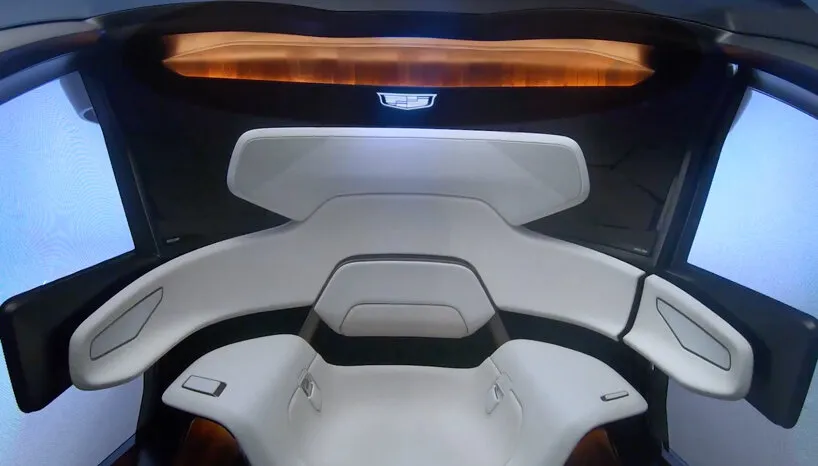
Cadillac’s pitch for these concepts wasn’t about raw performance so much as passenger experience. The SocialSpace shuttle abandons conventional controls (no wheel or pedals in the concept) and substitutes lounge-style seating that encourages conversation and relaxation — Cadillac’s design chief described it as “a social space for a group of friends or family.” The Halo concepts also incorporate biometric sensors and personalized settings (lighting, temperature, and even aromatics in rendering narration) that adjust conditions based on passenger vitals and mood. The eVTOL is positioned as a quiet, private single-occupant cabin for swift point-to-point trips across congested urban corridors.

Product implications
From a product and brand perspective, the Halo concepts do three things for GM/Cadillac:
- Signal design direction: The concepts preview cabin priorities (wellness, personalization, and lounge-style layouts) that Cadillac can bring to future EVs.
- Anchor Cadillac in premium future mobility: By showing aerial and autonomous concepts under the Cadillac badge, GM positions the brand as aspirational in an eventual multimodal ecosystem.
- Tie to GM’s tech stack: The presentation emphasized GM’s broader software and battery investments, framing Halo as one way those platforms (Ultifi/Ultium) could express themselves.
How GM imagines this fitting into mobility networks
GM framed the concepts as pieces of a multimodal mobility system, personal air vehicles like PersonalSpace could ferry a single rider between vertiports or rooftops, while autonomous shuttles would complete last-mile legs or serve small group trips. Cadillac and GM also tied the vision to their software and battery efforts, referencing Ultifi (software platform) and Ultium (battery architecture) as technology ecosystems that could enable connected, software-defined experiences across future vehicles, even though full commercial integration of air mobility remains speculative.


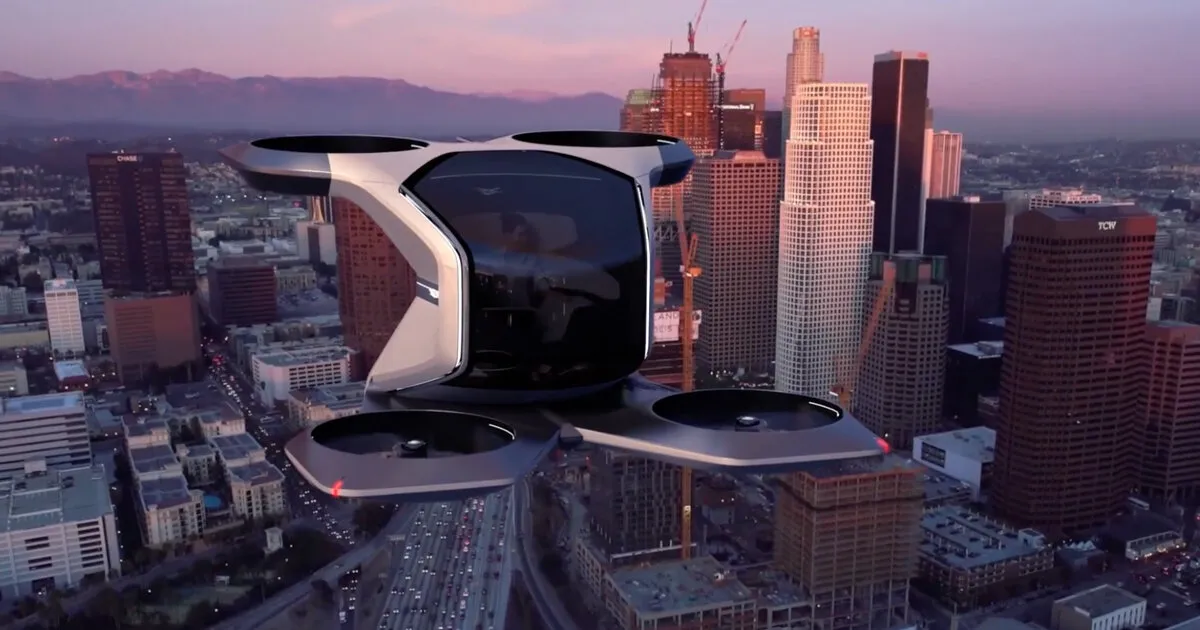
GM’s “flying Cadillac” reveal at CES 2021 is a carefully styled vision piece: a single-seat eVTOL (PersonalSpace) and a driverless shuttle (SocialSpace) that together articulate how Cadillac imagines time, luxury, and autonomy could be recombined. The Halo portfolio remains useful for product teams and designers as a look at what passenger-first, software-driven mobility could feel like, even if the path from renderings to certified flying vehicles remains long.
Image credit: General Motors