

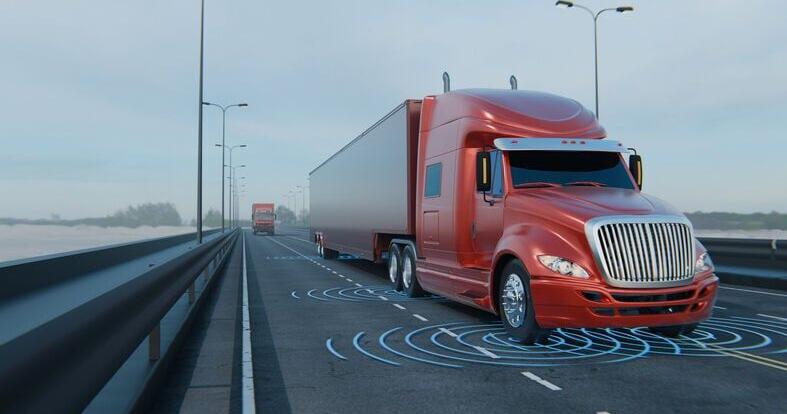
NEW YORK — A new project will help a worldwide-known company with getting its product to stores in Arkansas using autonomous vehicles, officials said Monday.
Officials with PepsiCo and Gatik said they would be involved in the multi-year agreement to deploy autonomous freight in North America.
Officials said in a media release that Gatik is already operating for PepsiCo in Arkansas, Arizona and Texas.
In discussing the project, both companies said the partnership will help PepsiCo. strengthen its supply chain network that creates and moves its food and beverage products across the US every day.
“It provides a practical way (for Pepsi Co.) to improve delivery consistency, add capacity and support customer service across a complex, high-volume operation,” the announcement said. “It also marks a major commercial milestone for Gatik, which is now delivering autonomous freight at commercial scale inside one of the world’s largest and most demanding consumer goods supply chains.”
Officials from both companies said the agreement would be beneficial for them as well as customers.
“Serving our vast network of customers requires a supply chain that is safe, reliable and built for the future,” Senior Vice President of Supply Chain at PepsiCo Jim Farrell said. “Batik is already operating inside our networks and brings the autonomous freight technology, commercial experience and scale we need to strengthen service, add capacity and move products more consistently for our customers.”
“Autonomous trucking has reached commercial scale when it operates inside one of the most demanding supply chains on the planet,” CEO and co-founder of Gatik, Gautam Narang, said. “That is what Gatik is doing with PepsiCo. Our autonomous trucks are already moving products every day across Texas, Arizona and Arkansas, and this partnership is proof that Gatik is becoming central to how the world’s largest companies move goods.”
Officials also said the trucks are designed for end-to-end deliveries on highways and surface streets, with routes built through regional logistical networks including hundreds of pickup and drop-off locations.
However, others, including a study last year by Harvard Law School, have argued about the safety of driverless vehicles, saying they believe the issue needs more scrutiny.
The information on the agreement was initially reported by the Wall Street Journal on Monday.