
 Moderation Team
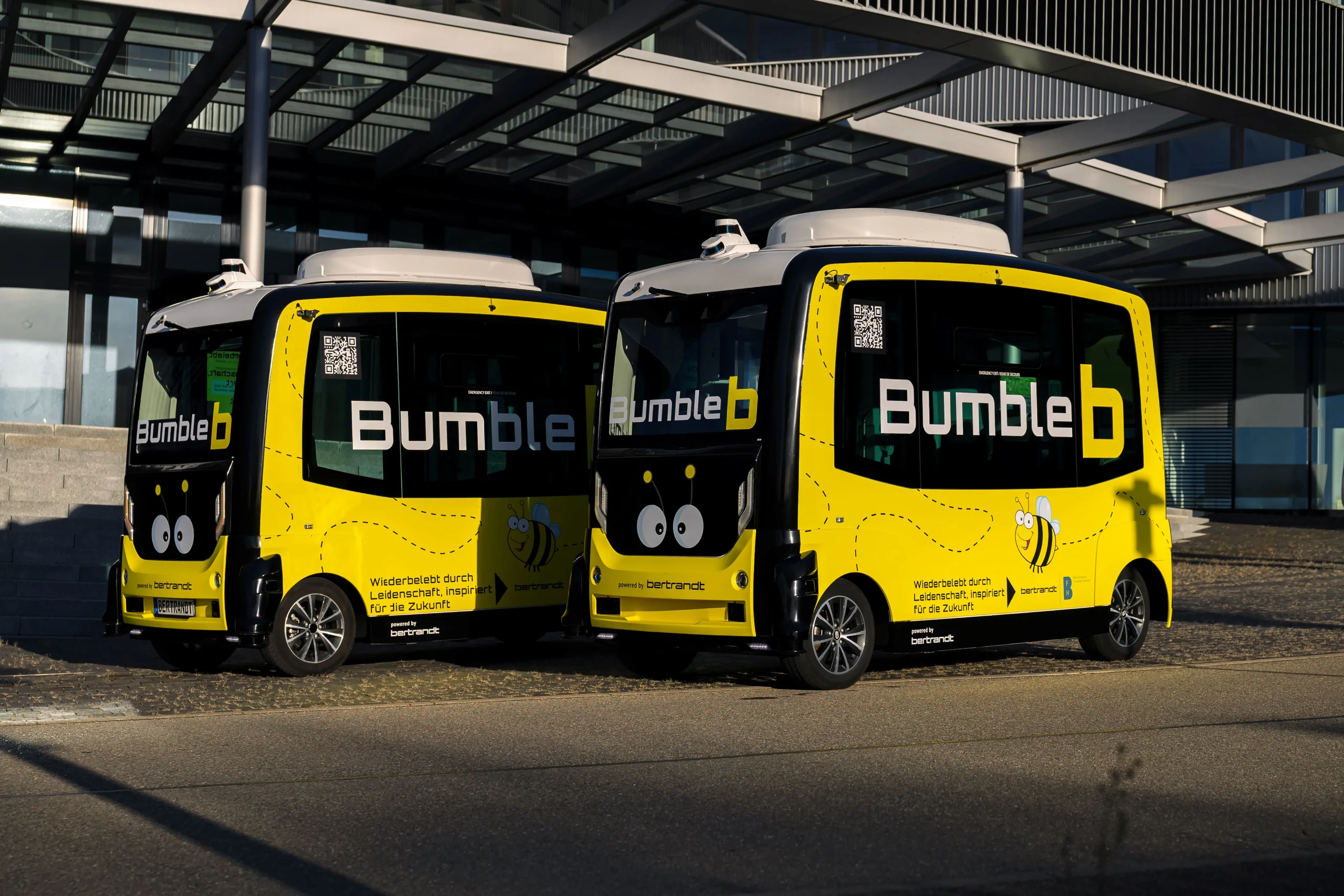
The BRAVE10k project has been launched in Germany, led by ITS provider INIT, to develop standardized procedures and digital tools supporting the integration of more than 10,000 autonomous vehicles into public transport by 2030.
INIT announces it has officially started the research and implementation project bringing together around 20 partners from the public transport, research, technology, consulting and standardization sectors to support the large-scale deployment of autonomous vehicles in Germany’s public transport network. The three-year initiative held its kick-off meeting on 1-2 July at INIT’s headquarters in Karlsruhe.
The development of automated and autonomous vehicles has made significant progress in recent years. I am very much looking forward to the next three years and to the many dialogues we have planned with the public transport sector. With BRAVE10k, we are taking the step away from pilot projects towards a scalable and economically viable public transport system of the future.
Yasmin Wehrle, Research & Development Manager at INIT and project manager for BRAVE10k
Funded by the German Federal Ministry for Economic Affairs and Energy (BMWE) and supervised by TÜV Rheinland, the project is titled “Bedingungen für die Rahmenausschreibung, Abwicklung, Verkehrszulassung und Einführung von mehr als 10.000 öffentlichen autonomen Fahrzeugen” (“Conditions for the framework procurement, implementation, approval and introduction of more than 10,000 public autonomous vehicles”). According to INIT, the consortium will develop standardized procedures and digital tools intended to simplify the planning, procurement, approval and operation of autonomous public transport vehicles.
BRAVE10k targets standardized deployment processes for AVs
The project is structured around the objective of enabling the integration of 10,000 autonomous vehicles into German public transport services by 2030. The consortium will work on operational concepts covering fleet management, control centres and technical supervision to support driverless vehicle operations.
Among the planned activities are the development of a standardized classification system for route requirements, allowing operating environments to be described and compared using common criteria. The project will also establish standardized approval and certification procedures for autonomous vehicle deployment in public transport.
BRAVE10k includes the collection and use of operational data for planning and service optimization, while a digital twin will be developed to simulate and assess vehicle operations, safety performance and service capability. Digital planning and analysis tools are also planned for transport authorities and operators, supported by open interfaces and interoperability standards. Source: INIT.
Consortium includes transport operators, research institutes and industry
The consortium includes INIT as project coordinator together with Fraunhofer IVI, Fraunhofer EMI, Fraunhofer IOSB, schwarzenberg.tech, Valeo Schalter u. Sensoren, Bertrandt Technikum, Verkehrsgesellschaft Ludwigslust-Parchim, Interlink, TrianGraphics, GOTECH, Fahrzeugmanagement Region Frankfurt RheinMain, SafeAD, RA Consulting, fka, the German Institute for Standardization (DIN), the Technical University of Munich, FZI Research Center for Information Technology, the Institute for Climate Protection, Energy and Mobility (IKEM), and the Karlsruhe Institute of Technology (KIT).
The project will also establish a stakeholder engagement programme involving the wider public transport sector during the coming months through structured dialogue activities.
In brief
- What is BRAVE10k? A three-year German research and implementation project focused on preparing the large-scale deployment of autonomous vehicles in public transport.
- Who leads the project? INIT coordinates the consortium, which brings together around 20 organizations from industry, public transport, research and standardization.
- What is the project’s target? To establish the conditions required for integrating more than 10,000 autonomous public transport vehicles by 2030.
- What outputs will be developed? Standardized approval procedures, digital planning tools, operational concepts, a digital twin and interoperability standards.
Yasmin Wehrle, Research & Development Manager at INIT and project manager for BRAVE10k, said: “The development of automated and autonomous vehicles has made significant progress in recent years. I am very much looking forward to the next three years and to the many dialogues we have planned with the public transport sector. With BRAVE10k, we are taking the step away from pilot projects towards a scalable and economically viable public transport system of the future.”
Matthias Teichmann, project manager at schwarzenberg.tech, added: “The path to 10,000 autonomous vehicles does not begin with vehicle technology alone, but also with targeted standards, processes and approval procedures. With BRAVE10k, we are jointly creating the conditions for autonomous mobility to become a safe, efficient and large-scale component of public transport in the future.”
GIPHY App Key not set. Please check settings