
 Moderation Team
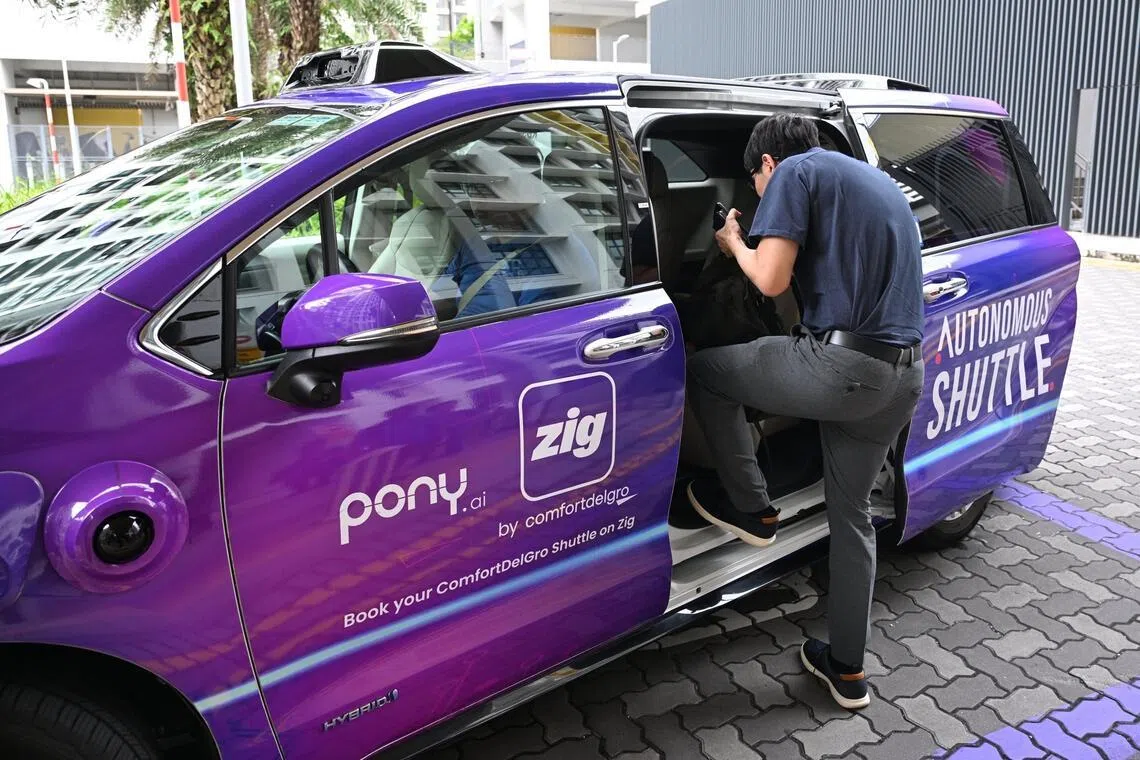
SINGAPORE – More help is on the way for private-hire and taxi drivers to stay competitive in a fast-changing transport sector that is being transformed by the adoption of self-driving vehicles.
The driver support package will focus on three key areas: long-term career conversion programmes, a new training scheme featuring short courses, and career guidance initiatives.
Senior Minister of State for Transport Sun Xueling, speaking in Parliament on July 7, said the latest programme aims to help drivers stay ahead of technology changes, while being well-equipped to seize new job opportunities.
The Government will take a proactive approach to help workers adapt, support job transitions, and equip Singaporeans with the skills and capabilities needed in the age of autonomy and artificial intelligence or AI, she added.
Sun also said the main reason for employing technology is to benefit people, so it will not be applied blindly.
She said: “We recognise that autonomy and AI, if not managed well, can bring disruption to existing jobs, industries and business models…
“We will roll out the use of autonomy and AI at a pace acceptable to residents, commuters and drivers.”
The Transport Ministry said in a statement: “The Government recognises that career transitions can be challenging, particularly with the opportunity costs of stepping away from driving to attend training.
“The package has been designed to offer drivers practical, accessible support that meets them where they are.”
The first plank in the package is programmes aimed at helping drivers plan their long-term careers and switch to new careers if they wish to do so.
It is aimed at making sure there are still good opportunities for drivers in the future, including new roles that will be created with the emergence of autonomous vehicles (AV).
The programmes will kick off from the third quarter of 2026, and the Skills and Workforce Development Agency (SWDA) will provide more details soon.
For instance, those keen on becoming AV specialist drivers will be equipped with technical and operational skills required for roles in the self-driving vehicle sector, such as safety operators, remote operators and fleet management jobs.
In the public transport sector, drivers can take part in a programme for public transport professionals, which will guide them to become bus drivers.
Those who sign up for training will be offered employment before the programme starts, while receiving upskilling on the job.
During the reskilling period, employers can receive up to 90 per cent salary support, the Ministry of Transport (MOT), Ministry of Manpower, National Trades Union Congress (NTUC), ride-hailing operator Grab and taxi firm ComfortDelGro (CDG) said in a joint statement.
Driverless shuttle trials by CDG and Grab were launched in the first half of 2026 in Punggol.
And from mid-2026, self-driving public buses will be tested on routes in Marina Bay and Shenton Way, as well as one-north in Buona Vista.
There are opportunity costs in stepping away from driving to attend training, but the transition package is designed to offer drivers “practical, accessible support” that meets them where they are, the statement added.
Second, a new training incentive scheme – featuring short-form courses – will allow drivers to get an early taste of reskilling before they decide to commit to longer-term programmes.
Set up by MOT and the Land Transport Authority (LTA), this scheme will be tested from January 2027 and run for three years.
Eligible drivers can choose from about 2,000 SWDA-supported courses, and get a training incentive of $20 an hour, capped at 80 hours, for a three-year period.
Every driver attending a course can get up to $1,600 in training incentives, offsetting some vehicle rental fees and lost income during the time taken to undergo training.
Sun said the amount is much higher than other training allowances now in place because drivers have more expenses.
Third, the Government and NTUC will improve outreach and career guidance efforts for drivers.
This will come in the form of a new one-stop resource page on the SWDA website for drivers to easily access curated information and resources.
Sun said AVs are a part of Singapore’s future in complementing and beefing up the nation’s transport network. The introduction of self-driving vehicles will be a gradual process to give commuters and drivers time to adapt, she added.
Yeo Wan Ling (Pasir Ris-Punggol GRC), who is also NTUC assistant secretary-general, said the union recognises that drivers forgo income and take on costs like rental when they go for training, so this support helps them commit to training.
“What matters is that this leads to reasonable and fair jobs, and that AVs open up not just new roles but new business models and livelihoods for our drivers,” added Yeo, who is also adviser to the National Private Hire Vehicles Association and the National Taxi Association.

GIPHY App Key not set. Please check settings