

Air cargo operators are increasingly turning to artificial intelligence and autonomous electric vehicles to tackle growing e-commerce demand, labour shortages and ambitious decarbonisation targets.
Technology firm Westwell says it is expanding the use of its AI-driven logistics systems across airports, seaports, rail networks and industrial facilities as cargo operators seek to improve efficiency while reducing emissions.
The company currently serves more than 200 customers across more than 30 economies and has positioned its “AI + New Energy” strategy as a solution to some of the biggest challenges facing global logistics.
Autonomous tractors target air cargo operations
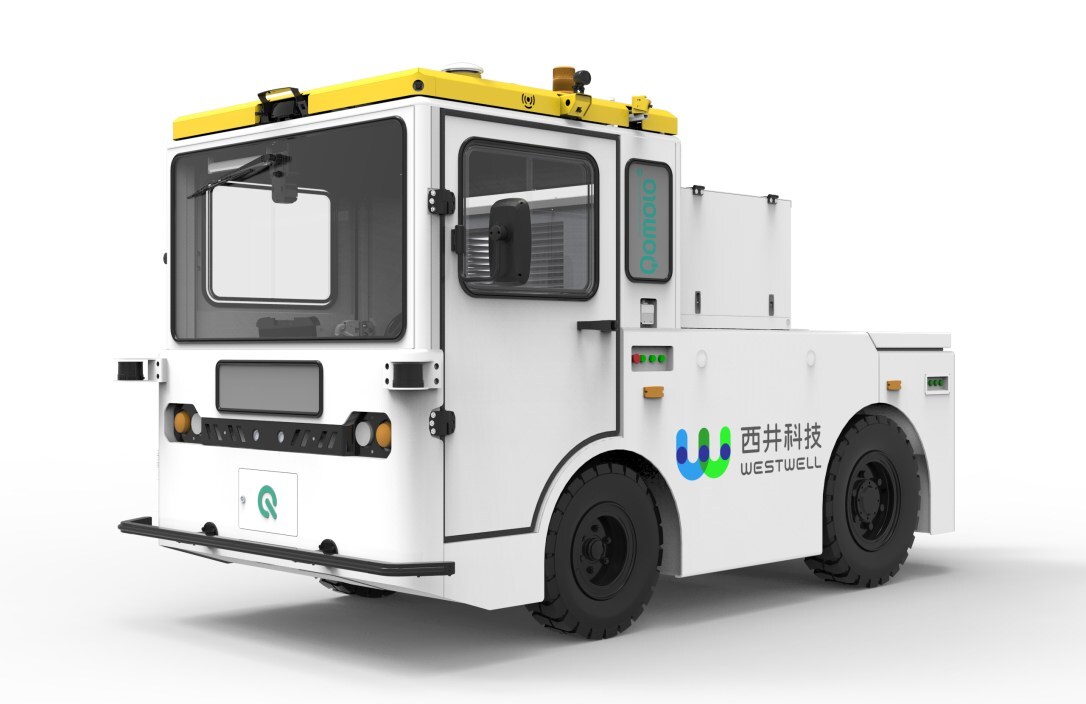
At the centre of Westwell’s airport offering is the Q-Tractor, an autonomous electric vehicle designed for airside cargo transport operations.
Powered by the company’s self-developed Q-Pilot autonomous driving platform, the vehicle combines advanced perception systems with artificial intelligence models capable of navigating complex airport environments.
The company says the vehicles can operate around the clock in a range of weather and visibility conditions using multiple safety systems designed to provide operational redundancy.
One of the system’s key features is automated trailer coupling and uncoupling, allowing cargo trailers to be connected and disconnected without human intervention. The technology is intended to support fully autonomous cargo transport, loading and unloading operations within airport cargo terminals.
Because the vehicles are powered entirely by electricity, they also help airports reduce emissions from ground handling activities.
AI manages cargo flows and fleet operations
Alongside its autonomous vehicles, Westwell has developed operational management platforms designed to coordinate airport logistics activities in real time.
Its ReeWell intelligent operations platform and WellFMS fleet management system use artificial intelligence to optimise routes, dispatch vehicles, manage energy consumption and coordinate cargo movements across airport operations.
The company says these systems can improve fleet utilisation and increase overall operational efficiency by linking flights, cargo flows, vehicles and energy resources within a single management framework.
Deployment expands across Asia’s major cargo hubs
Westwell’s technology has already been deployed at several of Asia’s largest air cargo gateways, including Hong Kong International Airport, Hong Kong Air Cargo Terminals Limited, Shanghai Pudong International Airport and Ezhou Huahu International Airport.
The company has also secured new projects at Fuzhou Changle International Airport and Xiamen Xiang’an International Airport.
In 2025, Westwell received approval to deploy its autonomous electric tractors at Hactl, one of the world’s largest independent air cargo handling operators.
The vehicles are now being used for unmanned cargo transportation within the terminal as part of efforts to improve productivity and support sustainability goals.
AI expands into runway safety
Beyond cargo transportation, Westwell is also developing artificial intelligence applications for airport safety operations.
At Shanghai Pudong International Airport, the company is working on an autonomous runway inspection system that combines self-driving vehicles, radar technology and AI-powered image recognition.
The system is designed to detect foreign object debris (FOD) on runways, helping airport operators identify potential hazards more quickly and support safe aircraft operations.
As airports worldwide face mounting pressure to handle rising cargo volumes while reducing costs and emissions, autonomous and AI-driven technologies are expected to play an increasingly important role in the future of air cargo logistics.