
 Moderation Team
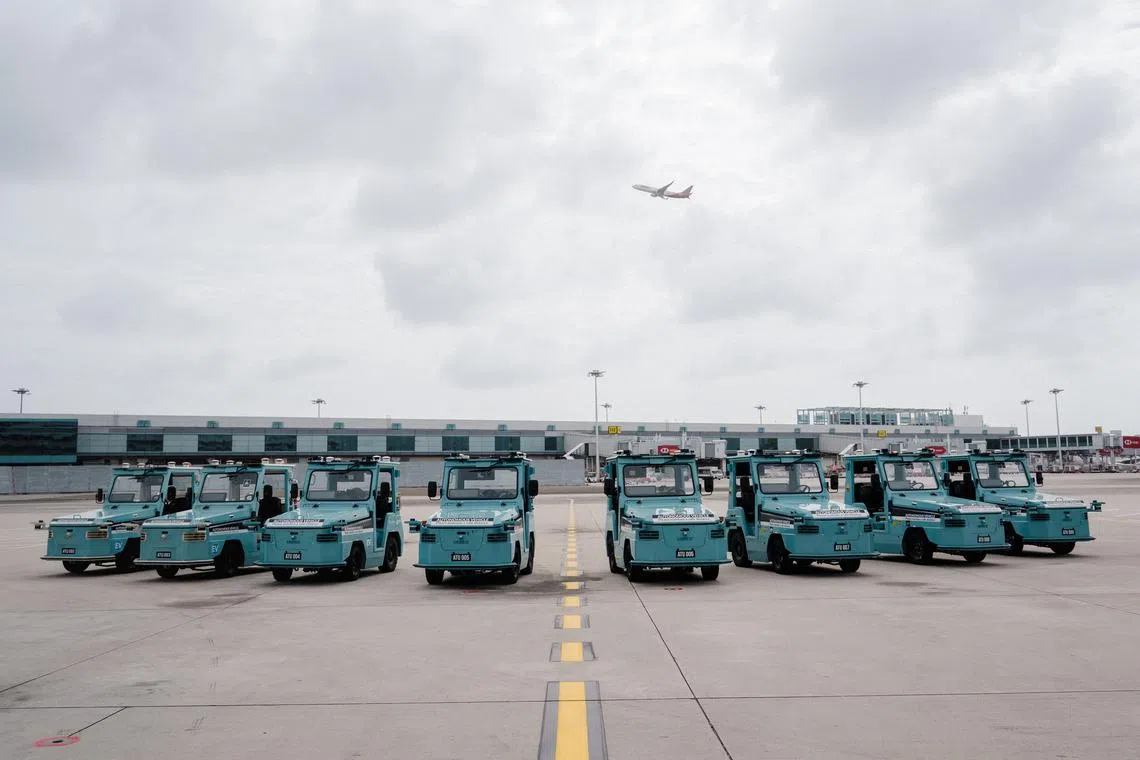
Driverless autonomous tractor in action, moving baggage across vast distances.Photo: Changi Airport Group
After 5,000 test trips and a year of trials, Changi Airport is now ready to deploy its first fleet of fully driverless tractors for transporting passenger baggage.
According to its official statement, it is already live in Changi’s airside (where the planes are), transferring baggage between Terminal 1 and Terminal 4. Instead of having to haul luggage between far-apart terminals, these driverless tractors will cover the distance on behalf of their human workers.
In return, Changi Airport said it eliminates the need for baggage handlers to drive, allowing them to focus on “last mile operations”. These operations likely refer to the transferring of baggage off and onto the correct connecting flights, ensuring their accuracy and efficiency in a busy airport.
Why driverless, and why now?
This effort is also futureproofing on Changi’s part. The international airport is gearing up for its new Terminal 5, set to open in the “mid-2030s”. Redesigning and reducing the scope and workload of airside staff today helps the airport and its workers prioritise the critical roles they will play when the new terminal comes online. In case it wasn’t obvious, not having to drive near much larger aircraft or other heavy duty vehicles is already a win for human safety.
Currently, two such tractors are deployed, with another six to be deployed later this year in Terminal 2’s baggage handling area. By 2027, the fleet will increase to 27 vehicles. Changi Airport also aims to use autonomous tractors to transport cargo and equipment, beyond just baggage.
What are the safety measures in place to co-exist with driverless baggage transport?
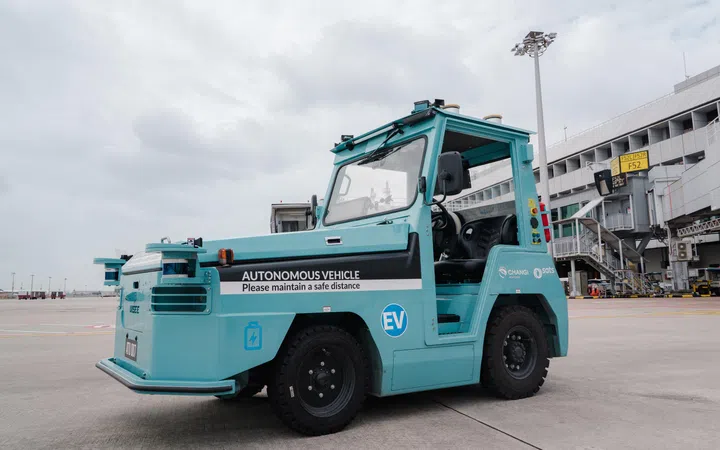
Clear markings and labels are on the vehicle to indicate that it has no human driver. Photo: Changi Airport Group
Ensuring the safety of other humans and equipment is the tractor’s mix of hardware and airport infrastructure. The airside has painted automated vehicle zone markings for them to traverse, with labels attached to these automated vehicles for visibility.
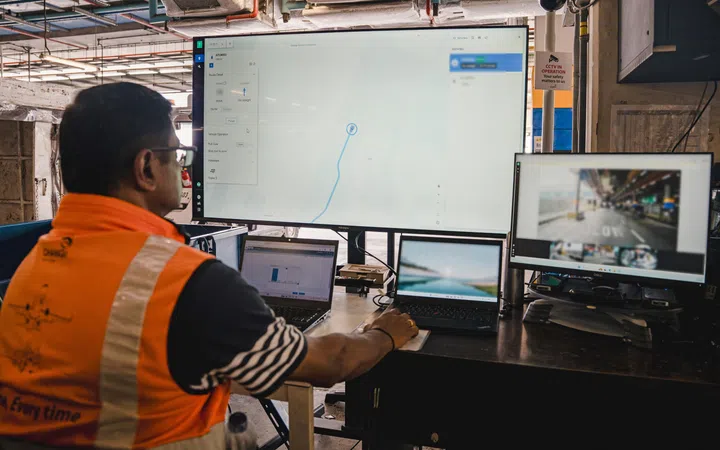
A control centre operator monitoring the tractors in action. Photo: Changi Airport Group
Each tractor is also equipped with a combination of 10 sensors and cameras for navigating the airside, and the fleet is tied to a control centre where human operators can monitor and, if needed, remotely take over the vehicle.
Source: Changi Airport Group (newsroom)


GIPHY App Key not set. Please check settings