

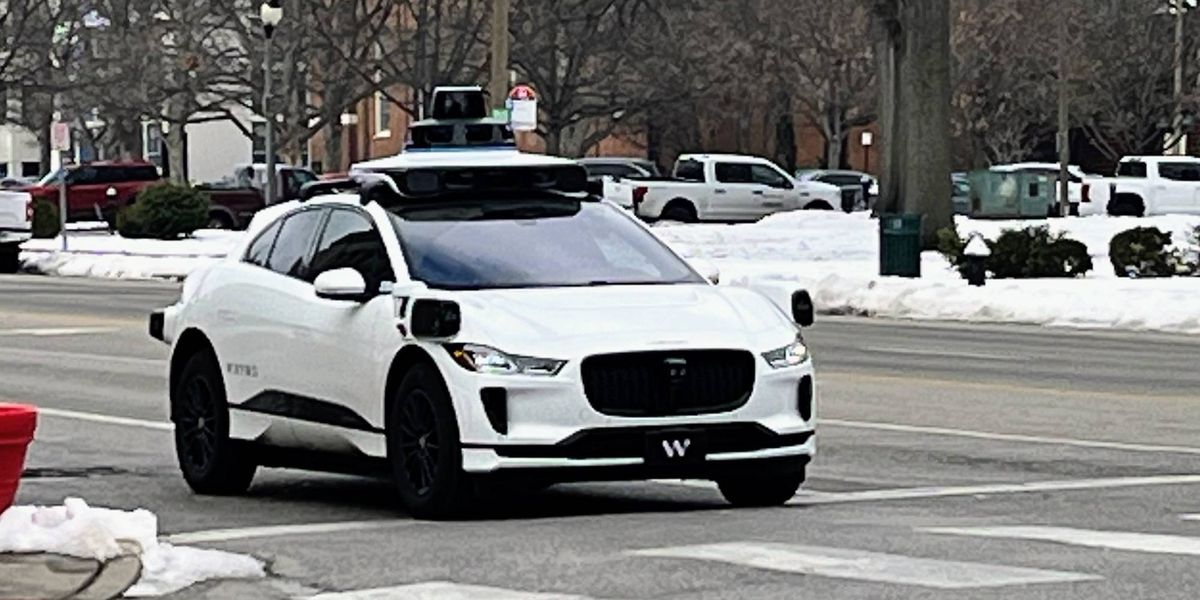
There could be an unexpected upside to driverless cars in St. Louis. In New Orleans, the driverless-car company Waymo is using its test vehicles to do something beyond learning the roads: mapping the city’s potholes.
“The purpose of these driver tests that they’re currently doing is to gather data about the state of our roadways,” said Ashley Becnel, an attorney for the New Orleans City Council. “I know one of the specific metrics they mentioned to us is that they’re creating a detailed map of potholes,” which Becnel said the company plans to share with the city.
“I’m sure that will be voluminous,” Becnel said. “They are working to gather that data, but we need a lot more information about what that looks like, how they implement that in practice, because it’s also, as we all know, something that changes frequently.”
An intersection, she noted, “might look one way one day and the next day have a completely different configuration” because of construction or a downed traffic light.
Here in St. Louis, Waymo’s cars have been on local roads since December. They also remain in an early testing phase, with human safety drivers behind the wheel, after a Missouri bill that would allow fully driverless operation stalled in the legislature this spring. Here, the vehicles are also described as documenting and learning local road conditions.
In New Orleans, the city’s Department of Transportation uses an API connection to Waze for Cities to dispatch its crews. Waymo supplies its pothole locations through Waze for Cities, updating DOT internal dashboards instantly.
That data could feed a pothole blitz already underway there. New Mayor Helena Moreno has pledged to fill 1,500 potholes a week or 300 per day — roughly triple the city’s old pace — and her administration says it patched about 10,000 in her first hundred days in office.
Meanwhile, Waymo’s formal, comprehensive pothole-mapping program is actually only running in the five cities where its cars already operate fully driverless: the San Francisco Bay Area, Los Angeles, Phoenix, Austin and Atlanta. The company says it has logged roughly 500 potholes so far in those places.