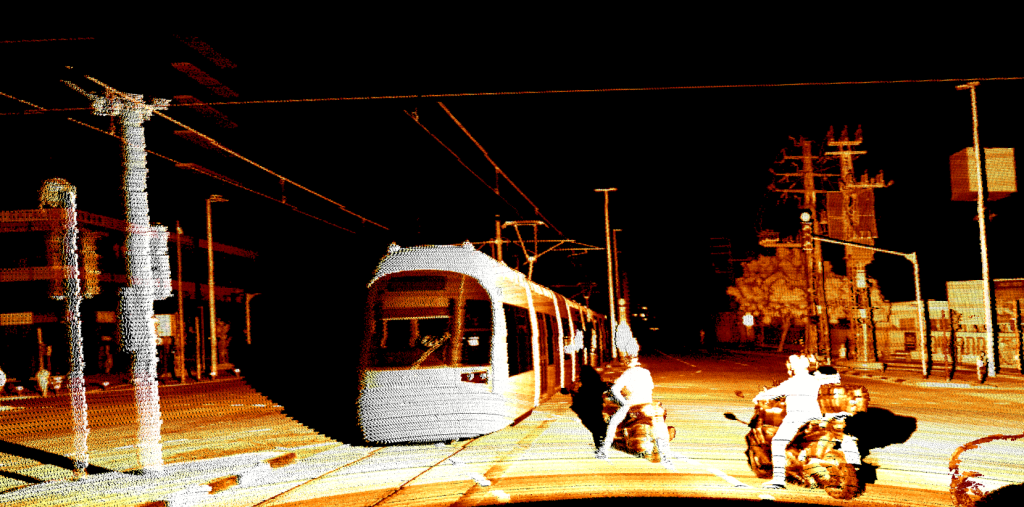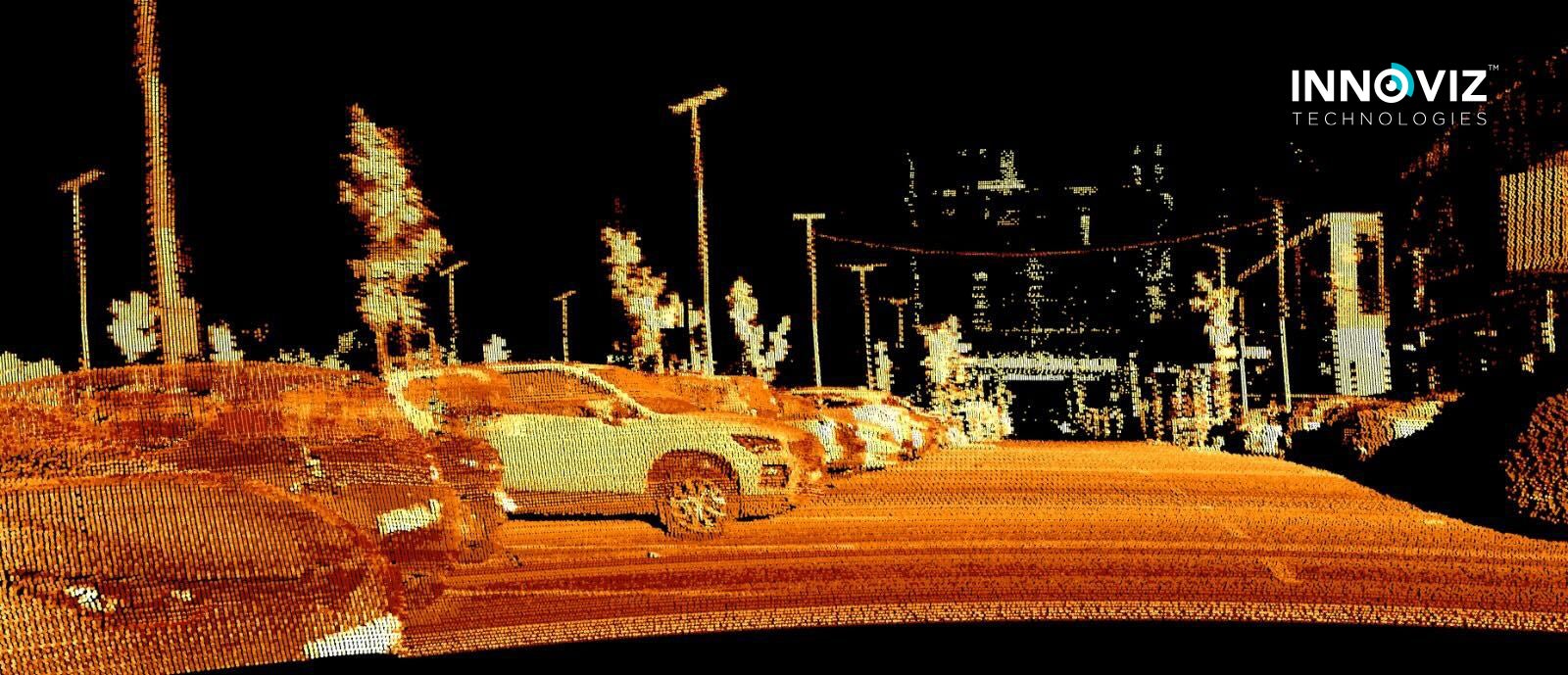
LiDAR (light detection and ranging), a technology that emits light in the form of laser pulses to create detailed 3D maps of a vehicle’s surroundings, is being used in conjunction with other technologies to enable autonomous driving capabilities.
Innoviz, a company manufacturing high-performance LiDAR sensors and perception software, showcased the company’s range of LiDAR systems and applications at this year’s CES, hosted in Las Vegas.
The company has previously partnered with BMW, powering L3 autonomous driving in BMW Series 7 models, thanks to the integration of InnovizTwo LiDAR.
The company has also worked with Volkswagen to integrate nine InnovizTwo LiDARs into each ID. Buzz AD vehicle, allowing for full 360° coverage for ‘safe, reliable navigation in complex urban environments’.
At CES Frankie Youd spoke to Omer Keilaf, CEO and co-founder, Innoviz Technologies to learn more about the different generations of LiDAR produced by the company.


Just Auto (JA): Could you discuss the LiDAR products and what they are able to achieve in automotive?
Omer Keilaf (OK): Innoviz is active in automotive and we’re also active in industrial. At CES we are showing a demo where we have a live broadcast of our LiDAR that is viewing the Las Vegas strip. What you’re seeing is very high detailed, 3D video of the strip; the bandwidth and the amount of data that we are gathering is huge. The sensor creates around a gigabit of data per second.
What we’re showing here is where we are compressing; with video you have video compression and we are doing 3D video compression. That’s super important if you mount a LiDAR somewhere on a pole and you want to analyse it on The Cloud. We took it from almost a gigabit, 1,000 megabit per second to around six or seven, and that’s a huge compression.
Now you can mount LiDARs in different locations in the world and connect to The Cloud and run any application you want. Until now because of the bandwidth limitations, you had to place a computer next to the LiDAR. It’s mostly for companies that want to use LiDARs for applications such as perimeter security, for intersection management, but these programs are still cumbersome because of all of the infrastructure.
Could you discuss the InnovizTwo LiDAR solution?
The second demonstration we have is showing InnovizTwo; our first generation went into a BMW. You can go in a vehicle in Germany, and it can drive autonomously on the highway; our LiDAR is mounted in the grill.
Our second generation is in Volkswagen ID.BUZZ AD. You can see there are multiple sensors around the vehicle and these are L4 applications, meaning there is no longer a driver. We have another programme with Audi, and we’re working with Mobileye on other programs also.
What you see with this LiDAR is every pixel here is a location where we shot the pulse of light, and we measure the distance. By doing so, pixel by pixel, we can create a 3D model at any angle.
It obviously helps the car to understand where things are, but there is a feature of our technology that no other LiDARs have. The big claim to fame for LiDAR is that it provides redundancy to cameras. When you drive the camera can become unavailable, say because of direct sun, light condition or dirt. Imagine the car goes over some mud and it gets splashes of dirt on it, some hits the camera and now the camera is unable to see. The redundancy is talking about the situation where you have no correlation between the problem that occurs on the camera and the LiDAR – fine. But if both of them are becoming dirty at the same time, that’s not really true redundancy. Any other LiDAR that you spray dirt on, it would be blocked, because eventually the laser will be blocked – everything will get blocked.
We have solved this by placing a mask on it, which protects the LiDAR screen so it won’t be impacted by flying dirt and can still function as normal.
Imagine you are in a robotaxi which is carrying out L3, which is where you have a passenger, a driver, that can still hold the wheel. The camera becomes blocked, so the driver has to be asked to control the wheel while the system cleans. In L4, there’s no wheel, so the car needs to be able to function, even if it becomes dirty. This is something that no other LiDAR is capable of doing which is why in L4, our LiDAR is succeeding compared with others.
Could you discuss InnovizThree and its use cases?
We made InnovizThree significantly smaller. The idea is that we want to mount it behind the windshield of a vehicle. Behind the windshield has several challenges when it comes to packaging, because you are in a very tough, very stressed environment – you have already several cameras here – so we made this with the camera inside.
Basically, we absorb the camera into the LiDAR, so nobody can say, “I don’t have space”.
This is something that many OEMs like because putting the sensor on the roof makes the car ugly and cumbersome. Putting it in the grill creates issues with dirt. So putting it behind the windshield is the Holy Grail.
The cost saving of our first generation to second generation is very significant – we saved around 70% – and for second to third generation we still saved around 40% manufacturing costs.
Where do you see the automotive market heading with LiDAR use?
There aren’t many Western LiDAR companies that work in automotive. We are successful in this space, and I expect that in the coming years it will bloom. You will see many L3, L4 applications, and eventually it’ll just be safer.
When we are driving a car it’s probably the most dangerous thing that we’re doing in everyday life and there’s no reason why you need to be exposed to risk when you just want to move from one place to another. I think it’s important to add any technologies that can help.
You do hear about OEMs starting to think about the time when customers are in the vehicle and they want to use their time better, and they want to be amused by the experience and so on. I think at the CES of three years from now, you will start to see innovations that are related to user experiences inside the car.
It reminds a little bit the revolution that happened with mobile phone. When Apple stepped in with software-defined mobile phones, there was a lot of attention around adding capabilities. Many start-ups were developing hardware to be embedded in these platforms. At some point it all converged, and then there were only two main players – it was Samsung and Apple, while in China, you have parallel worlds. Then I think a lot of focus went into the applications and all the start-ups went into the user experience applications, gaming, etc.
When automotive kind of burst, it became a new platform where there’s room for innovation and room for disruption. These technologies will also converge and eventually will be on every car.