
 Moderation Team
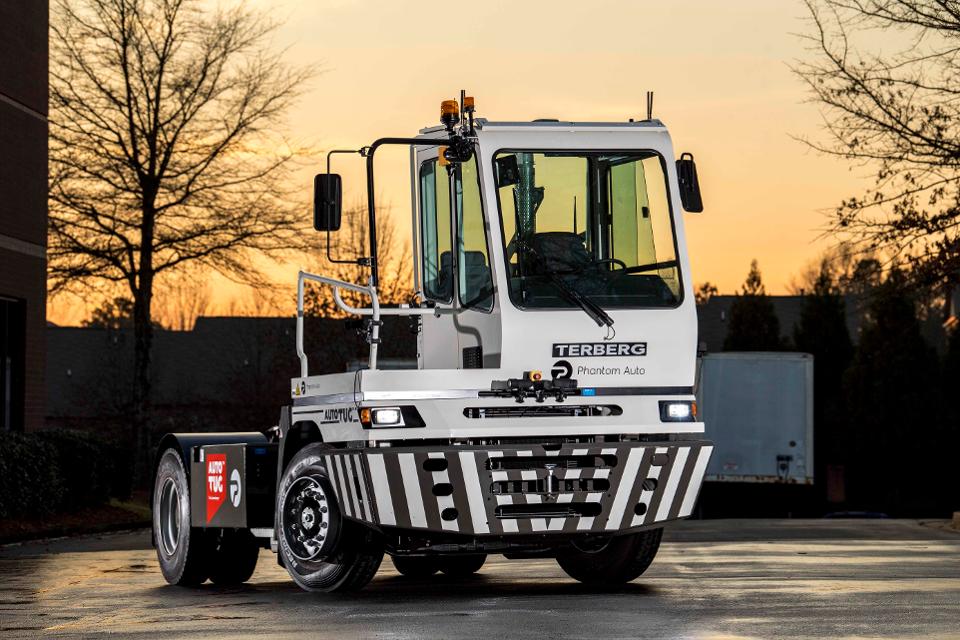
Sometimes, an autonomous truck isn’t really autonomous. Like the yard trucks that Phantom Auto is going to put into use with its just-announced partners Autonomous Solutions, Inc and FANUC America Corporation. These productivity vehicles, which are commonly used at places like docks and distribution centers, move semi truck trailers around the yards so they can get loaded or unloaded according to schedule. Today, that means someone has to get in and drive each trailer to its destination. With the new Phantom Auto technology, they can do it on their own. Almost.
The way Phantom Auto sees autonomous technology working in the near term is that the vehicles will be able to handle most of the tasks they need to do using their sensors and AI. But, when there’s a problem, that’s when Phantom Auto’s remote communication software – which includes tele-monitoring, tele-assistance and tele-driving – allows a remote driver to take over and give a bit of human assistance to the autonomous vehicle (AV). And Phantom Auto can do all of these things from thousands of miles away.
This is known as human-in-the-loop (HITL) technology, and Phantom Auto co-founder and chief business development officer Elliot Katz told me that yard trucks were the perfectly poised to be a real-world test bed for the company’s technology.
“As we looked at areas where our tele-operations software could have an immediate impact, yard trucks were obvious,” he said. “Right now, they have a human operating the yard trucks so they have optimal up time, so for them to make the switch to autonomous, they would have to have that same amount of up time.” That’s exactly what the HITL version of autonomy offers, Katz said.
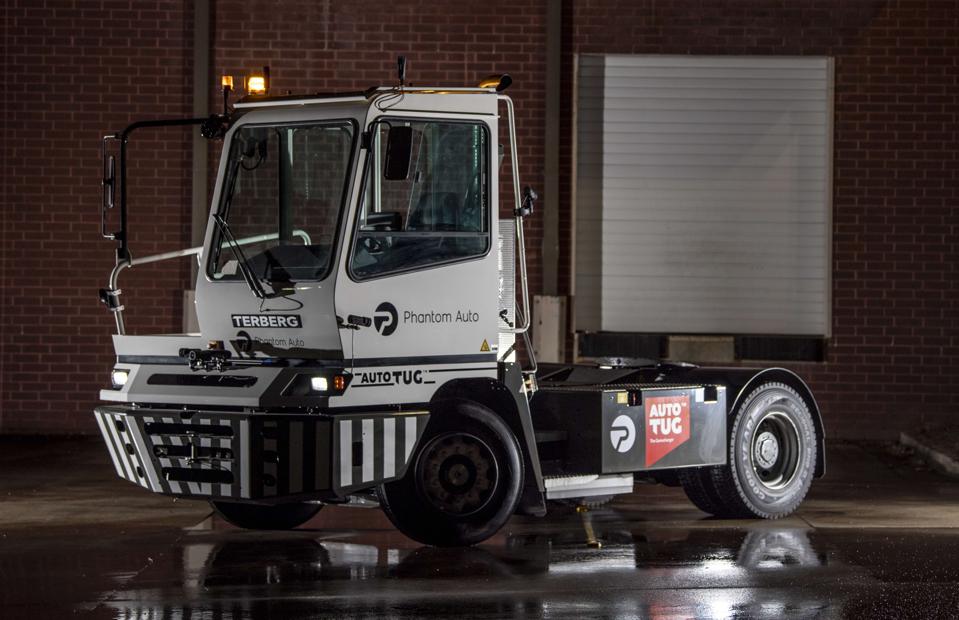
Specifically, the unmanned yard truck solution that Phantom Auto and its partners will be deploying have three features that make them suitable for a number of working yards, should the managers want to introduce them to the workflow. According to a company statement, they are:
- “vehicle-agnostic, so customers can work with their existing fleet and preferred yard truck brand;
- hardware-agnostic and easy to integrate, so that customers can use the solution without overhauling their vehicle hardware architecture; and
- require no modifications to trailers in order to obtain air line connections.”
That last bit is important since now the autonomous trucks can use the trailer’s air brakes if necessary. This part of the technology came about thanks to a robotic arm from FANUC.
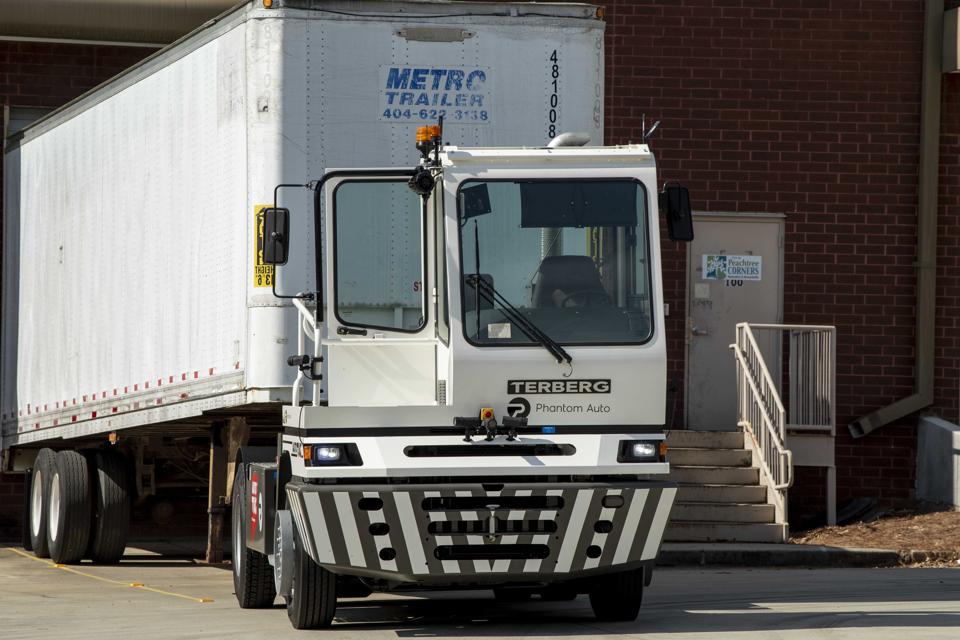
When Phantom Auto came out of stealth mode in 2018, it was broadly focused on autonomous technology for all sorts of vehicles. But once some of the realities of what it would take to put autonomous vehicles on public roads became clear, the company shifted to a more specific deployment strategy, focusing on places like closed campuses (the yard trucks) or slower-moving vehicles that carry goods instead of people (the company is working with Postmates on delivery robots). Rethinking how to get autonomous technology tested in the real world has caused Katz to believe that full-fledged AVs are still a ways away.
“If you want to get an accurate prediction when autonomous vehicles on public roads will be deployed, ask someone who’s entire livelihood depends on it,” he said.
Source: www.forbes.com


GIPHY App Key not set. Please check settings