 Moderation Team
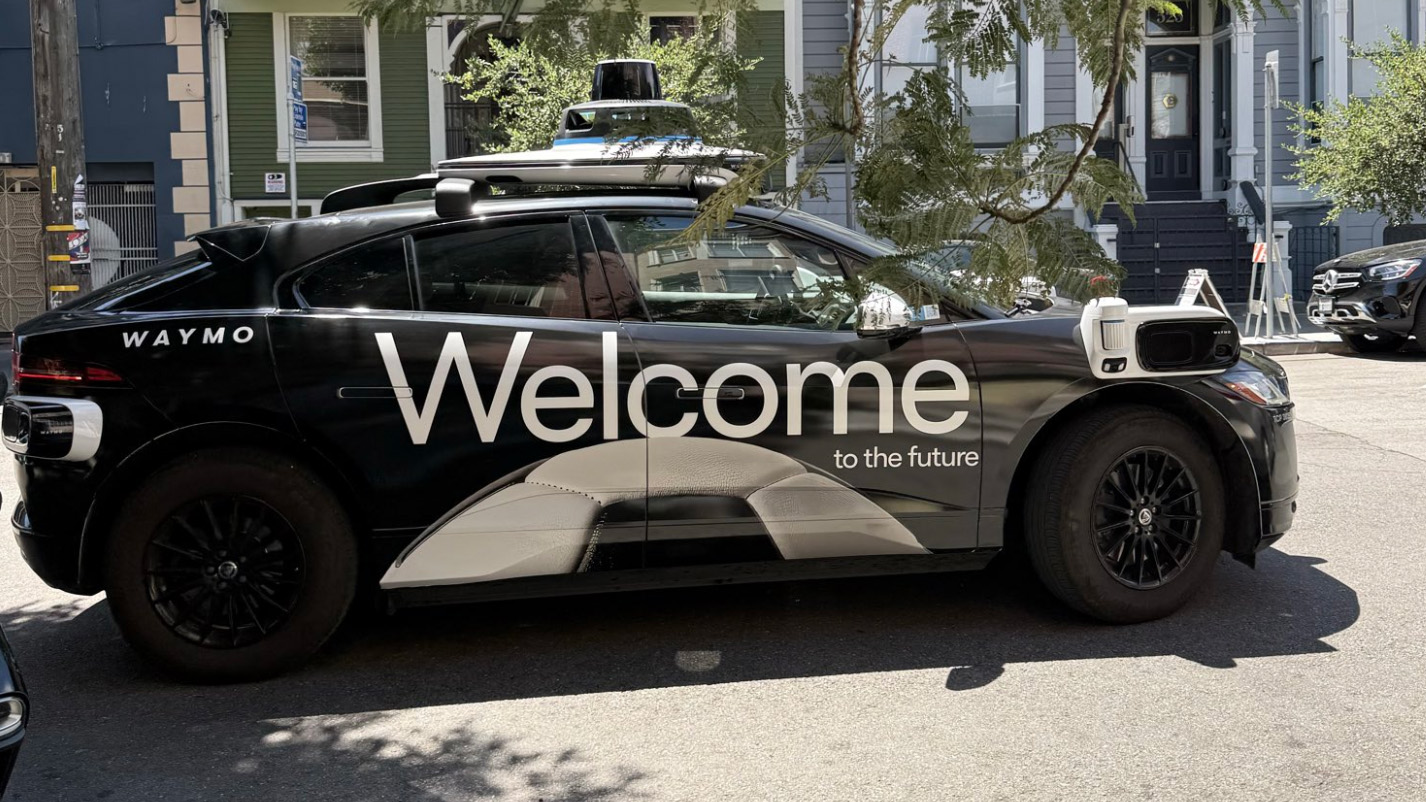
Waymo is recalling 3,871 robotaxis in the United States over a software defect that can allow its driverless cars to enter closed freeway construction zones and continue driving at speed.
The recall, filed with the National Highway Traffic Safety Administration (NHTSA) on Wednesday, covers vehicles running the Alphabet subsidiary’s fifth-generation Automated Driving System (ADS), the platform fitted to its Jaguar I-PACE fleet.
Regulators estimate that all vehicles carry the defect.
Under certain conditions, the system may enter and drive at speed through freeway construction zones, either by inappropriately prioritising the avoidance of other freeway hazards or by failing to recognise the zone, according to the filing.
Driving through a closed construction zone increases the risk of a crash, the NHTSA said.
The defect lies in the self-driving software, not in any physical component.
Phoenix and Bay Area Incidents
The recall stems from more than a dozen incidents across Arizona and California this spring.
Freeway driving is a relatively new capability for Waymo, which opened highway rides to passengers only in late 2025.
On April 11 and April 19, Waymo vehicles in Phoenix drove past ramp-closure signs into pre-planned freeway construction zones, prompting the company’s Field Safety Committee to open a review on April 20.
On May 18, seven Waymo vehicles entered freeway lanes with active construction in the San Francisco Bay Area, driving between cones that marked a closed lane.
Waymo restricted freeway driving while it investigated the cause.
The company’s Safety Board reviewed the issue on June 1 and decided to conduct a recall on June 8.
Those incidents had already drawn public attention.
On May 19, a passenger posted video of a Waymo accelerating through construction barriers on a closed freeway before police followed the car.
Days later, Waymo suspended all freeway rides in San Francisco, Los Angeles, Phoenix and Miami while it revised its software.
Waymo said it had “identified an area of improvement regarding performance around freeway construction zones” and had voluntarily restricted freeway operations the previous month.
As an interim measure, Waymo narrowed the vehicles’ operating scope to restrict freeway driving and will deploy a software update to detect and avoid construction zones, free of charge.
Fifth Software Recall Since February 2024
The action is Waymo‘s second recall in just over a month and its fifth since February 2024.
In May, Waymo recalled 3,791 robotaxis running its fifth- and sixth-generation systems after an unoccupied car drove into a flooded San Antonio road and was swept into a creek, a recall that also forced service suspensions in several cities.
Late last year, the company recalled 3,067 robotaxis over vehicles illegally passing stopped school buses in Texas and Georgia, a fix that did not fully resolve the problem; Austin’s school district later logged at least 24 further violations.
In May 2025, Waymo recalled 1,212 robotaxis over collisions with stationary barriers such as gates and chains.
Its first ADS recall, in February 2024, covered 444 vehicles after two robotaxis struck the same improperly towed pickup in Phoenix.
Waymo has said it files voluntary recalls proactively, at times after fixes are already deployed across its fleet.
Mounting Federal Scrutiny
The recall adds to a series of federal safety actions involving Waymo.
NHTSA is investigating a January 23 incident in which a Waymo struck a child near a Santa Monica elementary school during morning drop-off, causing minor injuries.
Waymo said the vehicle braked hard, cutting its speed from about 17 mph to under 6 mph before contact, and argued that a human driver would have struck the child at roughly 14 mph.
The National Transportation Safety Board is separately investigating a January case of a Waymo passing a stopped school bus with its lights activated, in violation of Texas law, and has expanded the review to a March 25 incident.
Austin’s school district has asked Waymo to halt operations during morning and afternoon school-bus loading hours.
Scaling Amid Safety Questions
The recall lands days after Waymo moved to accelerate its commercial growth.
Earlier this week, Element Fleet Management said it had signed a multi-year deal to manage Waymo‘s robotaxi operations — vehicle lifecycle management, charging, maintenance and fleet optimisation — beginning in San Diego and expanding to other markets.
Waymo will retain control of the Waymo Driver and its ride-hailing app, while Element, which manages more than 1.5 million vehicles worldwide, handles operations.
Scaling autonomous mobility “requires partners with proven operational discipline and global fleet expertise,” said Nicole Gavel, Waymo‘s head of business development and strategic partnerships.
San Diego is Waymo‘s first commercial market in Southern California outside Los Angeles, one of three cities — with Las Vegas and Detroit — slated for 2026.
Co-Chief Executive Dmitri Dolgov said in March that Waymo had reached about 500,000 paid rides a week and more than four million autonomous miles, and the company is targeting one million weekly rides by the end of 2026.
Waymo raised $16 billion at a $126 billion valuation this year and expects its fleet to exceed 3,500 vehicles.
The company is testing in Tokyo, where executives have said a commercial launch could come within months, and plans to enter London in 2026.
Waymo says its vehicles are far safer than human drivers, citing a 91% reduction in serious-injury-or-worse crashes, and notes that about 35 remote operators in the Philippines assist the fleet.
Co-Chief Executive Tekedra Mawakana has called for federal regulators to set national standards requiring autonomous-vehicle developers to prove their safety before deploying on public roads.


GIPHY App Key not set. Please check settings