

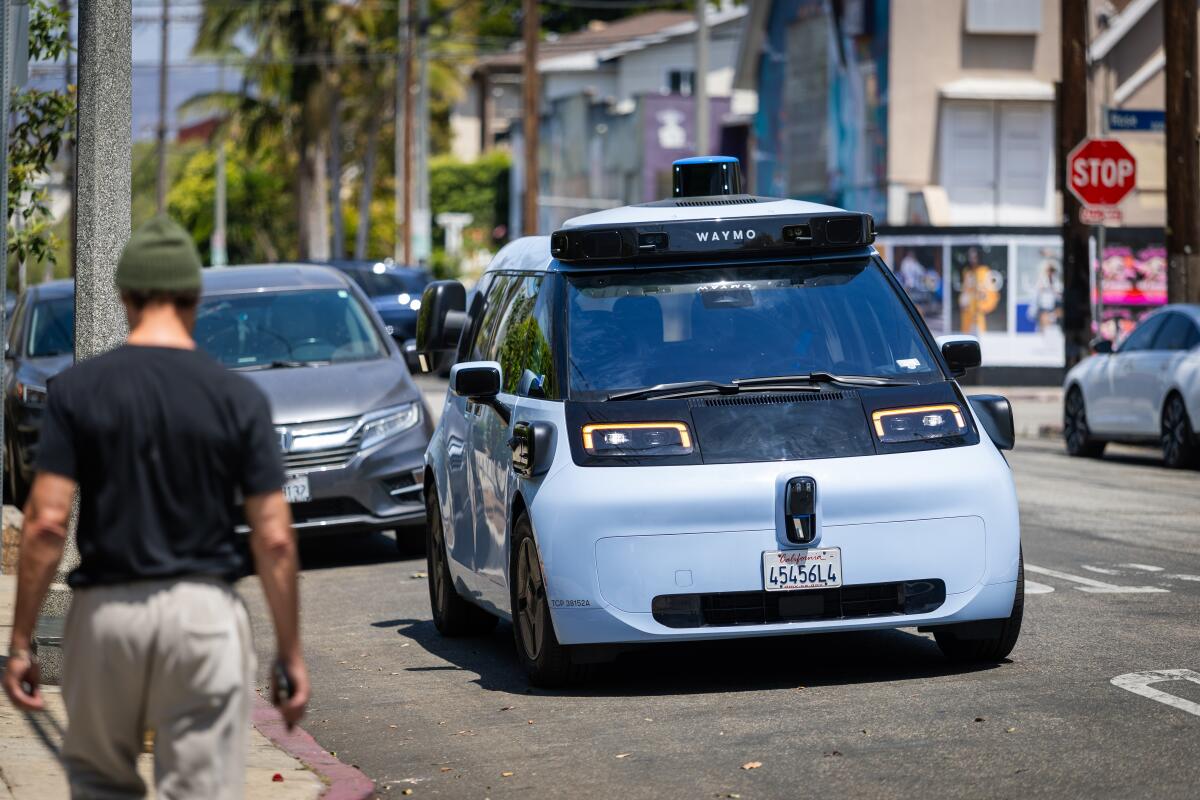
The Ojai represents a major milestone as Waymo’s first purpose-built robotaxi. Moving away from its traditional strategy of retrofitting consumer production cars, the company has introduced a spacious, van-sized vehicle. Its generous footprint stands in stark contrast to Tesla’s compact Cybercab, which features a much smaller two-seat configuration.

Manufactured by Chinese automaker Zeekr and outfitted with Waymo’s autonomous hardware at its Arizona facility, the Ojai focuses heavily on passenger comfort. The interior boasts expanded legroom, charging ports, and three dedicated rear-passenger screens.
Crucially, the Ojai debuts Waymo’s 6th-generation Driver software. According to Electrek, this upgraded system dramatically streamlines hardware requirements, reducing the number of onboard cameras from 29 to 13 while simultaneously scaling back the necessary lidar and radar units. These hardware efficiencies have reportedly driven production costs down, allowing Waymo to get a vehicle on the street for under $20,000.
The 6th-gen software also introduces advanced all-weather capabilities, allowing the system to operate safely in snowy conditions, a breakthrough that frees Waymo from its historical restriction to warmer climates. Consequently, the company has confirmed it is already laying the operational groundwork for an upcoming rollout in Chicago.
This deployment marks the latest chapter in a massive scaling effort. Waymo currently operates autonomous ride-hailing services across 11 major American cities and has surpassed 20 million driverless trips to date, a scale of operational data and experience unmatched by any competitor in the industry.
However, the rapid expansion has not been without friction. Earlier this month, Waymo was forced to temporarily suspend service in two cities after its vehicles repeatedly drove into flooded roadways, triggering a recall of 4,000 vehicles. Additionally, the company continues to address ongoing software scrutiny regarding its vehicles’ tendency to bypass stopped school buses without coming to a halt.