

The robotaxi market has become one of the most closely watched segments of the global mobility industry. Once viewed as a futuristic concept, autonomous ride-hailing services are steadily moving toward commercial reality as advances in artificial intelligence, autonomous driving software, sensor technologies, and electric vehicles reshape urban transportation. As investments continue to grow, one question is increasingly being asked by investors, businesses, and policymakers alike: Who actually owns the robotaxi market?

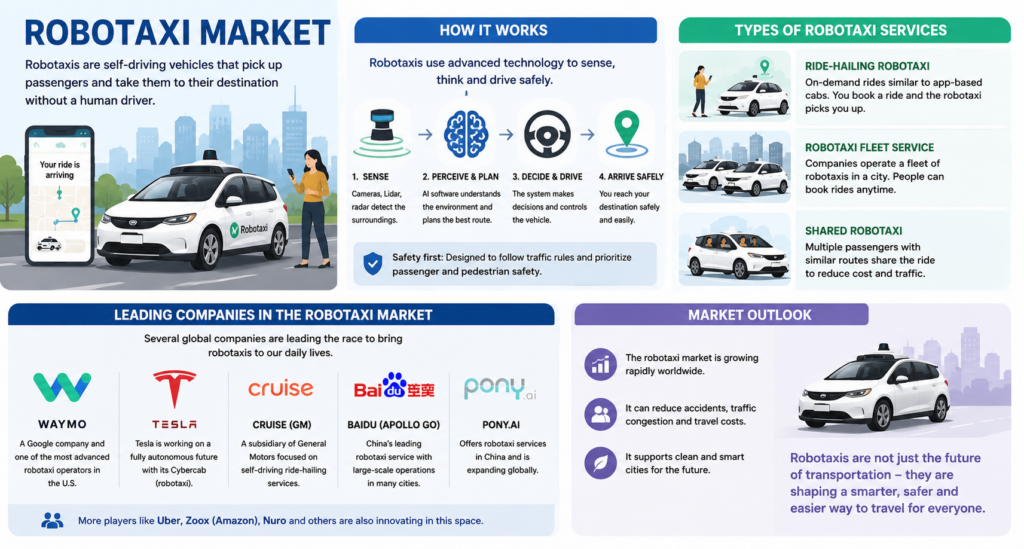
The short answer is that no single company owns it. While a handful of organizations have established strong positions through technological innovation and commercial deployments, the industry remains highly competitive. Market leadership is determined by a combination of autonomous driving capabilities, regulatory approvals, fleet deployment, strategic partnerships, geographic expansion, and the ability to operate economically at scale.
According to Persistence Market Research, the global robotaxi market size is likely to be valued at US$8.3 billion in 2026 and is expected to reach US$153.4 billion by 2033, growing at a CAGR of 51.7% during the forecast period from 2026 to 2033. These projections illustrate the remarkable pace at which autonomous mobility is expected to transform passenger transportation over the coming years.
A Market Defined by Competition Rather Than Ownership
Unlike traditional automotive industries where a few manufacturers often dominate production, the robotaxi market is being shaped by a diverse ecosystem of technology developers, automotive manufacturers, ride-hailing platforms, and autonomous driving specialists. Each participant contributes a different competitive advantage, making it difficult for any single company to establish complete market dominance.
Some organizations focus primarily on developing autonomous driving software, while others specialize in vehicle manufacturing, fleet operations, artificial intelligence, mapping technologies, or mobility services. This interconnected value chain has created an industry where collaboration is almost as important as competition.
Rather than asking who owns the market, a more accurate question is who is leading its evolution.
Waymo’s Operational Advantage
Among current industry participants, Waymo is widely recognized for achieving one of the highest levels of commercial deployment. Its fully driverless ride services have demonstrated that autonomous transportation can move beyond pilot testing into real-world passenger operations.
Operational experience provides valuable advantages. Every autonomous trip generates driving data that improves machine learning models, enhances safety performance, and refines navigation algorithms. As more driverless miles are completed successfully, autonomous systems become increasingly capable of handling complex traffic conditions.
This operational maturity has helped position Waymo as one of the benchmark companies against which many competitors are measured.
Tesla’s Different Vision
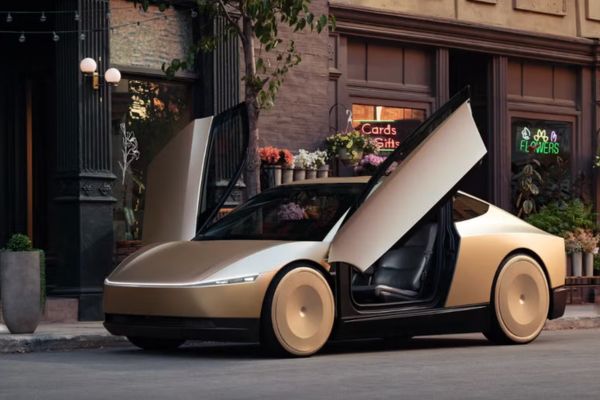
While several autonomous driving companies rely heavily on LiDAR-based perception systems, Tesla has pursued a fundamentally different strategy by emphasizing camera-based vision systems supported by neural networks and artificial intelligence.
This approach has generated significant discussion throughout the autonomous vehicle industry. Supporters argue that vision-based systems may eventually provide a more scalable and cost-effective solution, while critics question whether cameras alone can consistently match the environmental awareness offered by multiple sensor technologies.
Regardless of differing opinions, Tesla has influenced how the industry approaches autonomous driving, encouraging broader discussions about cost, scalability, and commercial deployment.
Cost Will Determine Long-Term Success
Early robotaxi prototypes demonstrated impressive technological capabilities but were often equipped with expensive sensor packages that limited commercial viability. Today, the industry’s focus has shifted toward reducing hardware costs while maintaining high levels of autonomous performance.
Companies including Pony.ai, WeRide, and Xpeng are working to simplify autonomous hardware architectures and improve manufacturing efficiency. Lower-cost sensor integration and more powerful onboard computing platforms are helping narrow the gap between experimental autonomous vehicles and commercially viable fleets.
This evolution reflects an important reality: the long-term success of robotaxis depends not only on achieving reliable autonomous driving but also on delivering rides at a cost that can compete with or outperform conventional ride-hailing services.
Strategic Partnerships Are Accelerating Growth
No company possesses every capability required to build a successful robotaxi ecosystem independently. As a result, partnerships have become one of the defining characteristics of the industry.
Automotive manufacturers provide vehicle platforms, technology companies develop autonomous driving software, semiconductor firms supply advanced computing hardware, and mobility operators manage customer-facing transportation services. These collaborations reduce development timelines while allowing organizations to leverage specialized expertise.
Such partnerships are expected to remain an essential component of market expansion as commercial deployments increase across additional cities and regions.
Regulation Continues to Shape Market Leadership
Technological innovation alone does not determine success in the robotaxi market. Regulatory approval remains one of the industry’s most significant challenges.
Governments and transportation authorities require extensive testing, safety validation, and operational oversight before permitting commercial driverless services. Companies capable of demonstrating strong safety performance and maintaining constructive relationships with regulators are often better positioned to expand into new markets.
As regulatory frameworks mature, broader commercial adoption is likely to accelerate, creating new opportunities for both established companies and emerging innovators.
Consumer Confidence Is Growing
Public acceptance of autonomous transportation has improved as driverless technologies continue demonstrating their capabilities. Increasing familiarity with advanced driver assistance systems, electric vehicles, and artificial intelligence has contributed to greater confidence in autonomous mobility.
Consumers are also recognizing practical benefits beyond convenience. Robotaxis have the potential to improve mobility for elderly individuals, reduce transportation costs, expand access to underserved communities, and contribute to more efficient urban transportation networks.
Growing public trust will play an essential role in determining how quickly robotaxi services achieve widespread adoption.
Who Really Owns the Robotaxi Market?
The answer may surprise many observers because the robotaxi market is not owned by any single organization. Instead, it is being shaped by an evolving group of technology companies, automakers, mobility providers, software developers, and infrastructure partners that continue pushing the boundaries of autonomous transportation.
Current leaders have established meaningful advantages through technological innovation, commercial deployments, and strategic investments, but the competitive landscape remains dynamic. As hardware costs decline, artificial intelligence improves, regulatory approvals expand, and partnerships strengthen, new competitors will continue entering the market while existing players refine their strategies.
Ultimately, leadership in the robotaxi market will depend on balancing technological excellence with commercial scalability, operational efficiency, regulatory compliance, and consumer trust. Companies that successfully integrate these elements will be best positioned to shape the future of autonomous mobility, but the industry’s rapid pace of innovation suggests that leadership will remain fluid rather than permanent.
For businesses, investors, and policymakers, the robotaxi market represents more than a technological milestone. It reflects a broader transformation in how people may travel within cities during the coming decade, driven by advances in automation, electrification, and intelligent mobility systems. Rather than belonging to one company, the future of the robotaxi market will likely be defined by those organizations that can consistently deliver safe, reliable, and economically sustainable autonomous transportation at scale.