

Early this year, a Bengaluru-based autonomous driving solutions startup Minus Zero tested a self-driving electric vehicle without a steering wheel in Bengaluru. It uses high-resolution cameras, self-supervised learning and foundational AI models to navigate in complex scenarios.
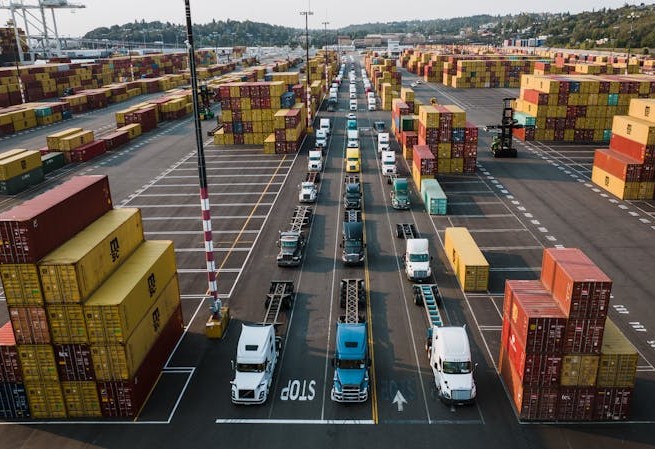
According to Minus Zero, such cars can be deployed in controlled environments such as educational campuses, residential areas, and corporate parks. The company is already working with commercial automaker Ashok Leyland to develop self-driving trucks for verticalized use cases such as ports, factories and corporate campuses. Ashok Leyland, on its part, is also working with London-based firm Aidrivers to develop autonomous electric terminal trucks to reduce net zero emissions.
While these are exciting developments, the possibility of a fully self-driving car with level 4 and 5 autonomy on India’s congested public roads remains a distant dream. However, autonomous driving is making progress behind closed doors in controlled and high-efficiency environments such as ports and airports.
Putting a driverless vehicle on public roads is inherently risky, which is why even in some US cities where robotaxis are allowed on public roads, the routes are predefined and geofenced. Experts believe autonomous vehicles will be a better fit in verticalized use cases.
“What we are seeing is that there is a need in India for verticalized use cases like ports and airports. As more and more people are traveling, the supply chain, including how baggage is moved, is operating 24×7. These are specialized vehicles. In mining, where large trucks operate, the price to pay for accidents is very high. In ports, it is an efficiency problem, very similar to industrial automation,” said Gagandeep Reehal, co-founder and CEO of Minus Zero.
However, the deployment even in such use cases is not easy. Reehal points out that there are still two challenges. “First, at what price point those systems can be offered, and second, which players are ready to build for a price-sensitive market,” he added.
“Early commercial wins will come where the business case is obvious and the environment can be constrained,” said Gaurang Shetty, Chief Innovation Catalyst at Riidl, a startup incubator at Somaiya Vidyavihar University, backed by the Government of India’s Department of Science and Technology.
According to Shetty, startups are already proving autonomy in niche use cases. He cited the example of Transtrak in Pune, which has prototyped compact but powerful transformer tractors that handle multiple farming tasks with one machine, and Accelo Mobility in Mumbai that has developed a semi-autonomous electric vehicle for mid- and last-mile logistics. “These examples show how autonomy and electrification are merging in agri-mechanization and industrial domains first,” he explained.
Similarly, in airports or logistics hubs in Mumbai and Navi Mumbai, Shetty points out that you can already see pilots where ADAS-level systems are being tested. Navi Mumbai International Airport is already using a fully automated cargo handling system, while Mumbai Metropolitan Region Development Authority (MMRDA) is planning a driverless pod taxi system between Bandra and Kurla.
“I expect that in the next 2 to 3 years, Maharashtra will host geo-fenced AV deployments in such high-utilization commercial spaces, well before citywide robotaxis.”
Why assisted driving is a safer bet for Indian roads
Self-driving or fully autonomous vehicles are different from regular ones as they use AI, cameras and sensors to navigate on roads, identify obstacles, and make real-time decisions like a human driver. The cameras help them track its surroundings and the data acquired on the road is used by the AI systems to enhance its ability to drive in new conditions.
That said, allowing fully autonomous vehicles on public roads can be very risky. Even vehicles with limited autonomy have led to fatal car crashes. For instance, in August, a US court held Tesla partially responsible for the fatal car crash that killed a pedestrian and caused serious injuries to another in 2019. The car in question had level 2 Advanced Driver Assistance System (ADAS) that allowed it to automate certain decisions like steering, applying brakes and adjusting speed. Though it requires the driver to remain attentive and take control anytime, the court found that the autopilot mode failed to alert the driver or stop the car from crashing and causing the accident. Tesla was slapped with $243 million in damages.
ADAS is a set of automated technologies that are being put in cars to enhance car safety on roads. It uses cameras and sensors to detect obstacles and rectify human errors. Its functionalities increase with each level.
For instance, level 1 ADAS, which is now available in many new cars in India, provides few automated features like applying brakes if the car is too close to another car. In level 2, cars can control steering, acceleration and deceleration, but requires the driver to be attentive all the time. It is available in a few car models in India. In level 3, the car allows the driver to take their eyes off the road but requires them to be ready when the system asks them to make a decision.
In level 4, the car can not just drive on its own but also take decisions like changing lanes on its own. However, it allows humans to take control anytime and is geofenced to operate within a restricted region. Level 5 is the fully autonomous level, where the system controls the car and doesn’t even allow humans to take over. Cars at this level don’t even have pedals or steering wheels.
Germany, China, Japan and some US states have already allowed cars with level 3 autonomous driving in specified areas and under specific conditions. For instance, in China level 3 driving is still in a trial phase and only a few carmakers are allowed to do trial runs in certain areas of Shenzhen. Similarly, Germany currently allows level 3 cars only on its limited-access highway systems called Autobahn, which uses physical barriers to separate traffic from opposite directions and also prohibits pedestrians and cyclists from using it. In the US, Mercedes Benz’s level 3 system has been certified for consumer use in the states of California and Nevada. But they can only operate on certain highways during daytime at low speeds.
Waymo robotaxis, which fall under the level 4 autonomous driving category, are allowed to operate in certain areas of cities such as Los Angeles, San Francisco, and Phoenix.
“When you sell a car to consumers you cannot control these vehicles. In the consumer segment, globally full self-driving is not seen as viable because of liability. It’s not just an Indian thing. Auto-pilot is the right option. You can always argue how advanced it can be,” said Reehal.
The fact that many of the countries are moving towards even level 3 and level 4 ADAS cars with so much caution as to not allow them beyond specified areas and at certain speeds, shows the scrutiny that will be needed for a country like India, where roads are more chaotic.
“Indian roads are unpredictable, especially with monsoon flooding. Datasets often miss such edge cases, so systems can underperform in real conditions. Sensors, LIDARs, and advanced cameras are still priced for global markets, and when added to vehicle costs, they don’t align with India’s price-sensitive mobility landscape,” warns Shetty. He adds that labour economics also has a role as autonomy has to beat human driving costs to be adopted faster.
Regulation is one of the biggest barriers. Road transport and highways minister Nitin Gadkari has said multiple times that his government will never allow self-driving cars on public roads in India as they will take away jobs.
The issue of localized data
Lack of diverse, localized datasets is another concern, but efforts to address it are underway. International Institute of Information Technology (IIIT) Hyderabad has built an India driving dataset (IDD) for unstructured public roads and traffic conditions. This open dataset includes more than 46,000 annotated images and has over 10,000 users in 88 countries. It is meant to fill the gaps missing in global datasets such as autorickshaws, cattle, potholes, and undefined road edges.
Prof C V Jawahar, Dean R&D at IIITH, points out that most of the smart vehicles are tested and calibrated on western roads. “We know our roads are different, but how different? We wanted to capture these differences objectively,” said Jawahar, adding that IDD has significantly helped in establishing the importance of datasets for Indian autonomous driving and road safety. “We have seen a large number of startups and researchers using IDD to know limitations of their technology in Indian conditions. But, developing HD maps, corner case datasets, and covering geographical diversity of Indian roads require a lot of effort and significant investment,” he added.
Reehal also agrees that the entire industry is going towards a data driven approach, as “people realize that the way LLM solved the chatbot with more data, they are expecting the same to work for autonomous driving. 90% of cases have been solved. It’s only the 10% that remains unsolved.”
While a diverse dataset can make the difference, Reehal cautions that data on its own is not enough, it’s the engineering that goes on that data that matters. “Even for LLMs, companies curated them themselves. It didn’t exist out of the box,” he added.
Shetty agrees that autonomous vehicles in industrial use cases cannot rely solely on open datasets, as it needs logistics-specific driving data like loading zones, narrow lanes, stop-and-go traffic, and high-density delivery routes. He feels that a hybrid approach is needed– “leverage open datasets to bootstrap, use driver-labelling to scale, but also invest in in-house collection for your own deployment zone.”
Grants from the Government’s Department of Science & Technology and schemes like HDFC Parivartan have been vital in helping manufacturing-focused startups build their own pipelines, added Shetty.
Reehal doesn’t foresee removing drivers from public roads in the near future. “For that to happen, a lot of things in the Indian auto sector as a whole have to evolve– AI, infrastructure, and regulatory point of view,” he added.