
 Moderation Team
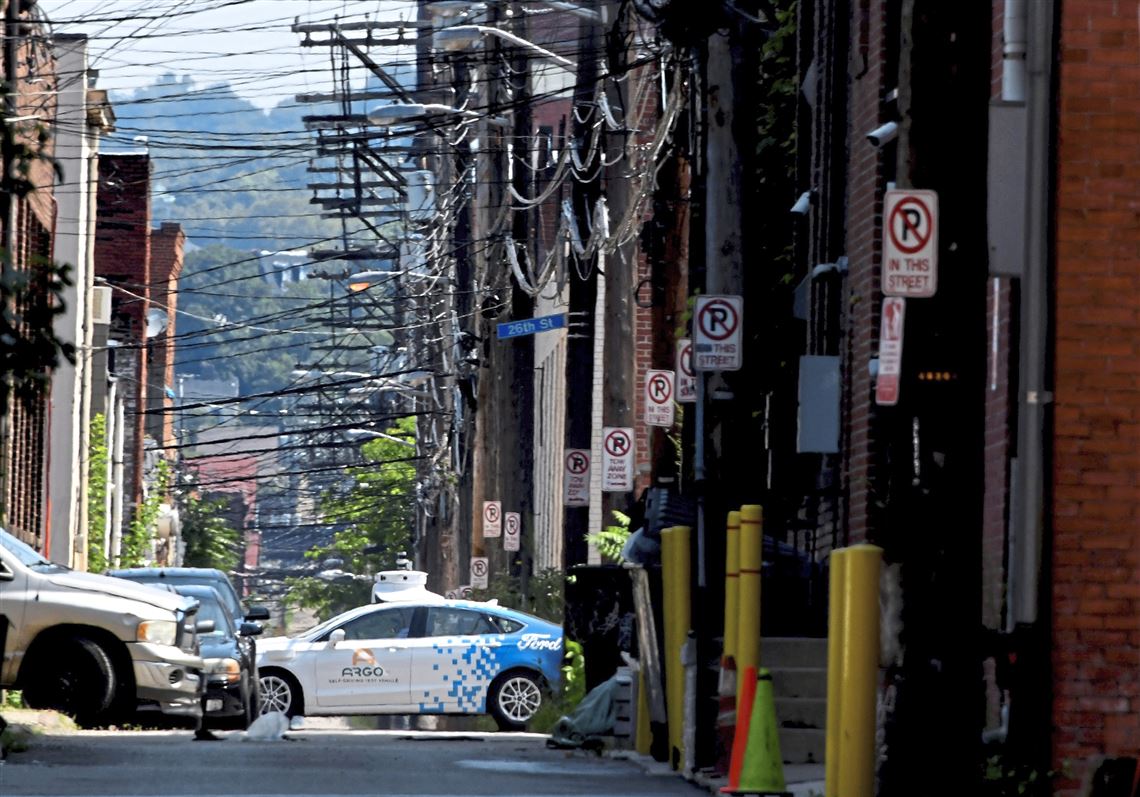
Most autonomous vehicle companies parked the cars and paused testing amid the novel coronavirus pandemic. For safety reasons, companies typically have two people in self-driving cars when they are operating autonomously, making social distancing nearly impossible.
Now, as Pennsylvania moves forward with phased reopening plans, some are revving their engines again.
The nearly two-month pause did not cause delays in development, most companies said. In Pittsburgh, Uber, Aurora Innovation, Argo AI and Aptiv, which recently partnered with Hyundai Motor Group, are competing to develop self-driving cars quickly and safely.
Using simulations to work on their software, security guards to test car sensors and Slack channels to chronicle work-from-home adventures, each company claims to be making progress in the autonomous vehicle race.
At Uber, “productivity is still staying really high” and employees are working against the timelines they set out at the beginning of the year, said Sarah Abboud, communications manager for the Advanced Technologies Group, which is responsible for the San Francisco-based company’s self-driving efforts.
Karl Iagnemma, president and CEO of the Boston-based Hyundai-Aptiv Autonomous Driving Joint Venture, said his company is not forecasting a “material change in our technology roadmap.”
At Aurora, CEO and co-founder Chris Urmson wrote in an April blog post that “work looks different these days, but we’re more committed to our mission than ever.”
Aurora, which is based in Lawrenceville and also has offices in Palo Alto, Calif.; San Francisco; and Bozeman, Mont., has kept its 480 employees engaged with virtual 15-minute “daily standups” to keep everyone on the same page and a Slack channel called the “WFH-diaries” to share productivity hacks and news about their newest “co-workers.”
Aurora and Argo both resumed testing last week, in response to Pennsylvania’s decision to begin reopening parts of the economy in Allegheny County and surrounding areas.
To keep employees safe, both companies assigned the workers riding inside the cars — Aurora calls them vehicle operators, while Argo calls them test specialists — to a permanent partner.
Aurora is also providing masks for employees and has enhanced cleaning for offices and vehicles.
Argo, which has its Pittsburgh office in the Strip District, started daily temperature checks and made sure shifts started at least 30 minutes apart to limit contact with colleagues. It also had test specialists undergo an “extensive refresher training to ensure their driving skills are as sharp as ever.”
Inside the vehicles, Argo installed a plastic barrier that runs the length of the car to separate the two employees. It also installed new air filters that will be cleaned weekly with UVC light, a spectrum of ultraviolet light that can be used as a disinfectant.
Uber, which has headquarters for its Advanced Technologies Group in the Strip District, and Aptiv, which recently moved to Hazelwood Green, have yet to resume testing.
Aptiv continued some testing operations in Boston, Las Vegas and Singapore and has been leveraging its simulation capabilities. The company plans to resume some testing in the private parking lot of its Pittsburgh facility but won’t start public road testing for a few more weeks, Mr. Iagnemma said.
Uber has also run thousands of scenarios in simulation and continues to put its parked cars to work, Ms. Abboud said.
To collect data on how the cars sense pedestrians walking by, employees have asked security guards at Uber’s facilities to walk past a parked car a number of times. The test is not to see whether the car can detect the guard, but how it performs once it does, Ms. Abboud said.
Last November, Uber’s self-driving vehicles ran into a speed bump when a review of a fatal crash involving a pedestrian and an autonomous vehicle found the software was not equipped to handle some situations, like a person jaywalking.
Uber said its mission specialists — the term it uses for the people who operate the vehicles — have remained employed and on payroll.
But since the beginning of the pandemic, the company has trimmed its workforce by about 25%.
The most recent round of cost-cutting measures, which included laying off 3,000 workers and shuttering or consolidating 40 offices, impacted the Advanced Technologies Group, Ms. Abboud said. She could not offer any more details.
Aptiv and Aurora, meanwhile, have plans to hire. The Hyundai-Aptiv Autonomous Driving Joint Venture plans to hire 200 new employees between its Pittsburgh and Boston offices.
Argo AI could not disclose detailed information about personnel or financials, communications director Alan Hall said.
Uber’s self-driving cars could soon be back on the test track the company operates in Hazelwood Green, Ms. Abboud said.
In that controlled environment, Ms. Abboud said the cars could operate with just one test specialist inside at a time. Determining a timeline for returning to public roads would be harder, she said.
“There’s a ton that goes into that and we have to make sure that we’re taking every scenario into consideration,” she said.
“I think anytime you can get in to the real world, you learn something new, even if it’s less densely populated for the time being,” Ms. Abboud said. “I think in our case, it’s going to be less about that and more about how do we do it safely.”
Lauren Rosenblatt: [email protected]; 412-263-1565.
Source: www.post-gazette.com

GIPHY App Key not set. Please check settings