
 Moderation Team
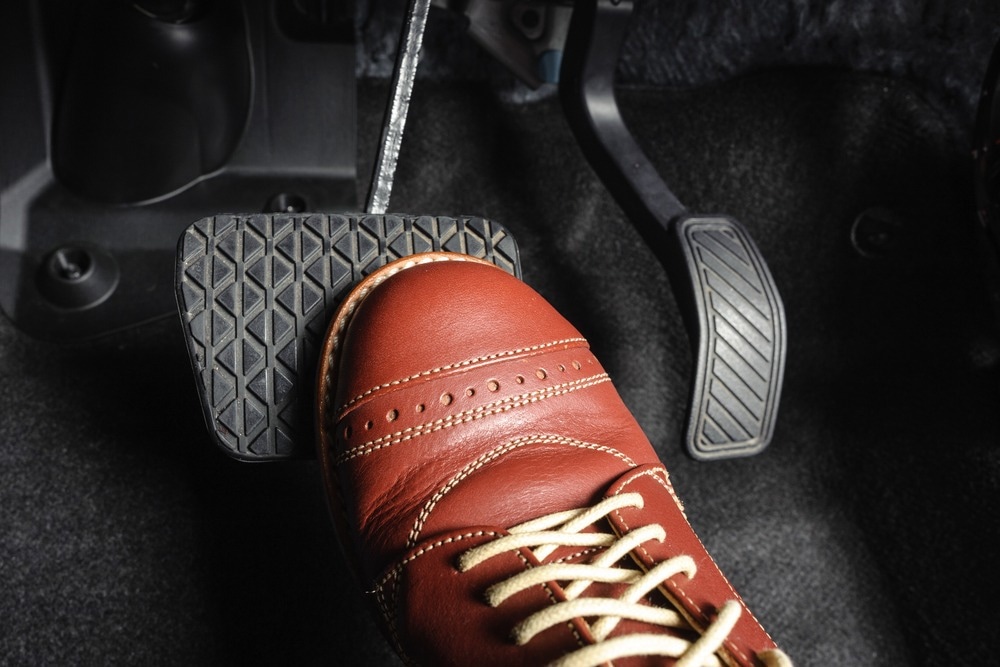
Image Credit: Nor Gal/Shutterstock.com
A new electromechanical brake system sensor, recently brought to market by Sensata Technologies, exceeds the demands of compatibility, improving response time by capturing drivers’ intention to brake before they even move their feet.
Updating Brake Systems for Electrification and Automation
Cutting-edge brake technology is following the automotive industry’s “x-by-wire” trend by moving away from mechanical, hydraulic brakes toward all-electric “brake-by-wire” systems.
These all-electric brake systems (as well as hybrid hydraulic-electric brake systems) are being used in the latest hybrid and electric vehicles, and would feature in any future iteration of autonomous driving that meets requirements for safety.
Different safety factors for electric and autonomous vehicles have motivated the development of brake-by-wire and hybrid brake systems. This is because of the different needs for redundancy in electric systems.
In traditional hydraulic brake (and steering) systems, the output is mechanically linked to the input. As long as the brake line is connected, the brake will nearly always respond to pressure on the brake pedal. In-built redundancies in the hydraulic system ensure the system will continue to work safely even if parts of it stop working.
Such a level of failsafe is not present in single electric systems, which is why redundancy needs to be built into x-by-wire platforms differently. This can be achieved by running parallel, identical sensors to output circuits, or by running two different systems at the same time.
Source: www.azosensors.com


GIPHY App Key not set. Please check settings