 Moderation Team
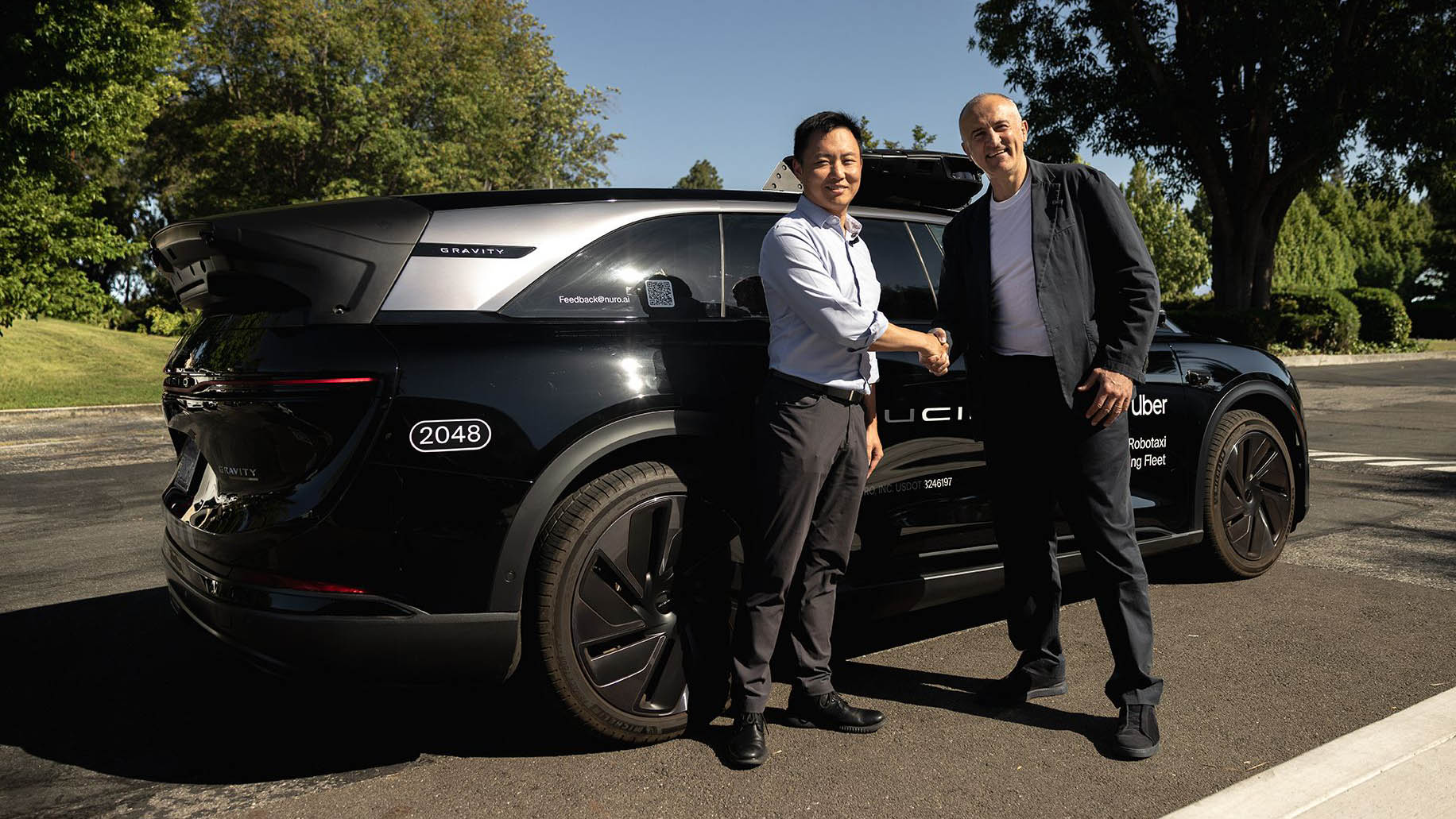
Lucid Motors‘ recently appointed CEO Silvio Napoli said the Saudi-backed EV maker “is preparing” to manufacture the first production validation robotaxis at its Arizona factory.
The EV maker will integrate Nuro‘s autonomy hardware directly on the production line alongside its own Gravity SUV platform.
“Lucid is preparing to build the first production validation robotaxis at our Arizona factory,” the newly appointed CEO wrote on LinkedIn..
Napoli disclosed the progress on Thursday, describing a visit to Nuro‘s facilities where he took his first ride in a Lucid Gravity robotaxi alongside Nuro co-CEO Jiajun Zhu.
“The integration of Nuro‘s technology into Lucid Gravity is impressive, and the speed of progress across Lucid Motors, Uber, and Nuro is even more so,” Napoli wrote.
The post represents Napoli’s first public engagement with the robotaxi program since assuming the CEO role on June 1.
His appointment followed a lengthy leadership search after the departure of founder and former CEO Peter Rawlinson in early 2025 — who interim CEO Marc Winterhoff succeeded. He has since returned to his role as chief operating officer.
Hardware vs Software Integration
The robotaxi-spec Gravity is assembled at Lucid‘s AMP-1 plant in Casa Grande, Arizona.
Nuro‘s hardware suite — including the purpose-built roof-mounted halo module, high-resolution cameras, solid-state LiDAR sensors, radar units, and high-performance compute based on Nvidia‘s DRIVE AGX Thor — is fitted on the assembly line.
Nuro‘s software — the Nuro Driver Level 4 universal autonomy system — is added separately after the vehicle leaves the factory, during the commissioning phase when Uber takes ownership and prepares the vehicles for fleet operations.
Uber has licensed the Nuro Driver system and will own and operate the robotaxis alongside third-party fleet partners, with Hertz subsidiary Oro Mobility serving as fleet manager.
Houston Named as Second Market
Napoli’s comments followed the formal announcement earlier this week that Houston will serve as the second planned deployment market for the robotaxi service, with commercial operations expected to begin in mid-2027.
Robotaxi builds of the three-way partnership had been previously spotted testing in the city.
The three companies said Houston was selected for its scale — as the fourth-largest city in the United States — its trip diversity, and what they described as a clear regulatory framework for autonomous vehicle operations.
Nuro has maintained a presence in Houston since 2019 and has previously conducted Level 4 autonomous operations on the city’s public roads, giving the startup familiarity with the area’s driving conditions, including rain, storms, and road debris.
Uber has already secured a 50,000-square-foot depot facility and a dedicated charging pitstop in Houston.
Construction is expected to begin in early 2027, ahead of the planned service launch.
The three partners have said they plan to expand to dozens of additional markets in the coming years, though no further cities have been publicly named.
The San Francisco Bay Area remains the first target market, with the service on track to launch later this year.
Nearly 100 Vehicles Testing
The robotaxi engineering fleet now includes around 100 vehicles operating across California and Texas, running 24 hours a day, seven days a week.
Nuro is leading autonomous driving development and validation through a combination of simulation, closed-course testing at its Las Vegas facility, and supervised public-road testing with safety operators behind the wheel.
The company completed the installation of its Level 4 system on the first Lucid-based robotaxi less than two months after the partnership was announced in July 2025.
The test fleet is expected to grow further in the coming weeks as Lucid begins manufacturing production validation units at Casa Grande.
During Lucid‘s first-quarter earnings call in May, Winterhoff said production validation builds for the robotaxi-spec Gravity would begin in the second quarter, with regular production of robotaxi vehicles for commercial sale targeted for the fourth-quarter.
Regulatory Progress in California
The program has cleared several key regulatory hurdles in California in recent months.
In May, Nuro‘s existing California Department of Motor Vehicles driverless testing permit — held for six years for its low-speed delivery vehicles — was extended to cover the Lucid Gravity.
Days later, Nuro secured a separate California Public Utilities Commission Drivered Pilot Permit, allowing it to carry passengers during pilot testing with a safety driver on public roads.
Neither permit authorizes paid commercial rides.
Uber and Nuro employees have already begun testing the end-to-end customer experience in San Francisco, ordering robotaxis through the Uber app.
Uber’s $500M Commitment
Uber‘s financial commitment to the program has grown substantially since the partnership was first announced.
The ride-hailing company initially agreed to deploy at least 20,000 Lucid vehicles over six years, separately investing $300 million in the EV maker.
In April, Uber expanded that commitment to at least 35,000 vehicles — a 75% increase — and invested an additional $200 million in Lucid, bringing its total equity stake to $500 million and approximately 11.5% of the company.
The expanded fleet will include both the Gravity SUV and vehicles built on Lucid‘s upcoming midsize platform, referred to internally as the Cosmos.
Despite the deepening operational commitment, Uber is sitting on steep paper losses on its Lucid equity position.
The ride-hailing company’s original 13.7-million-share stake, disclosed at a value of $326.3 million in September 2025, had fallen to approximately $64.5 million by mid-June — an 80% decline.
Lucid shares reached a record intraday low of $4.47 earlier this month before recovering slightly to trade around $5.36 on Thursday.
Napoli’s Early Moves
Napoli, who previously served as chairman and CEO of Swiss industrial firm Schindler Group, was named as Lucid’s next CEO on April 14 and formally assumed the role on June 1.
Since taking the helm, Napoli has signaled a focus on organizational streamlining and execution.
Within days of his start, Senior Vice President of Engineering and Software Emad Dlala — one of Lucid‘s longest-serving executives — departed the company.
Lucid said Dlala had elected to leave and that the company was “transforming its organization to accelerate innovation and strengthen execution.”
Dlala’s exit was the 14th departure of a top executive since late 2023, according to an EV analysis.

GIPHY App Key not set. Please check settings