
 Moderation Team

Xpeng advances its relatively unique vision of autonomous driving into beta testing. By Stewart Burnett
Xpeng has officially begun closed beta testing of its robotaxi programme; Chairman and Chief Executive He Xiaopeng becoming the first rider, ordering a ride from outside the company’s Guangzhou headquarters in what he called a fully seamless hail-to-ride process. The milestone caps an eight-month sprint from announcing the robotaxi plan last November to road testing in January, production rollout in May, and now a working end-to-end service.
The vehicle is built on Xpeng’s newly-launched flagship GX SUV and represents China’s first factory-installed, mass-produced robotaxi developed entirely in-house. The vehicle is engineered to SAE Level 4 autonomous driving standards, and runs on four of Xpeng’s own Turing AI chips, delivering a total of 3,000 TOPS of onboard computing power. Clearly intended to future-proof the vehicle as technology improves, Xpeng claims that this is the highest of any vehicle currently available globally.
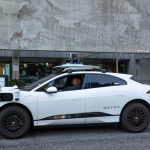
Unlike Waymo’s LiDAR- and HD-map-heavy approach, Xpeng has built its robotaxi as a camera vision-led production vehicle from day one, treating autonomy primarily as a manufacturing problem rather than a fleet-conversion exercise. Its approach its similar to Tesla’s in terms of which sensors it prioritises, although unlike Tesla it does retain a radar system.
Its VLA 2.0 model handles driving decisions end-to-end, cutting system latency to under 80 milliseconds and letting the car generalise to new cities without pre-mapped data, a genuine point of differentiation given how capital-intensive HD mapping—and how restrictive geofencing—has proven for rivals.
That production-first logic extends to Xpeng’s commercial structure. A dedicated Robotaxi Business Unit, established in March, oversees the fleet directly, while a parallel SDK strategy lets third parties such as Amap, already signed as its first ecosystem partner, dispatch Xpeng robotaxis through their own apps rather than requiring Xpeng to build ride-hailing demand from scratch.
The company is also planning a “Robo” trim that would put the same autonomous technology used in its commercial fleet directly into cars sold to regular consumers. This is a route that neither Waymo nor Tesla’s dedicated Cybercab has pursued in the same way. Because the robotaxi shares its GX underpinnings with a mass-market consumer vehicle, Xpeng can also lean on its existing dealer service and charging network to maintain the fleet, avoiding the custom depot costs that have weighed on software-only operators.
The VLA 2.0 model is not strictly for self-driving functions alone: it also serves as the shared foundation for Xpeng’s Iron humanoid robot and its AeroHT flying car programme. Together, these programmes reflect a broader bet that training the same AI across cars, robots and aircraft will mature its driving intelligence faster than conventional simulation alone. Pilot operations are planned for the second half of this year, with the company targeting fully driverless service, without safety operators on board, by early 2027.
In a social media post, Xpeng’s He was careful to frame the closed beta milestone as a tentative first step towards deployment, saying large-scale rollout remains a long-term process still dependent on safety, experience and generalisation gains.
The GX itself went on sale in China in May from CN¥269,800 (US$39,700), meaning Xpeng is now testing its autonomy stack on a vehicle already generating conventional retail revenue, a hedge that limits the commercial risk of the robotaxi programme running behind schedule.

GIPHY App Key not set. Please check settings