 Moderation Team
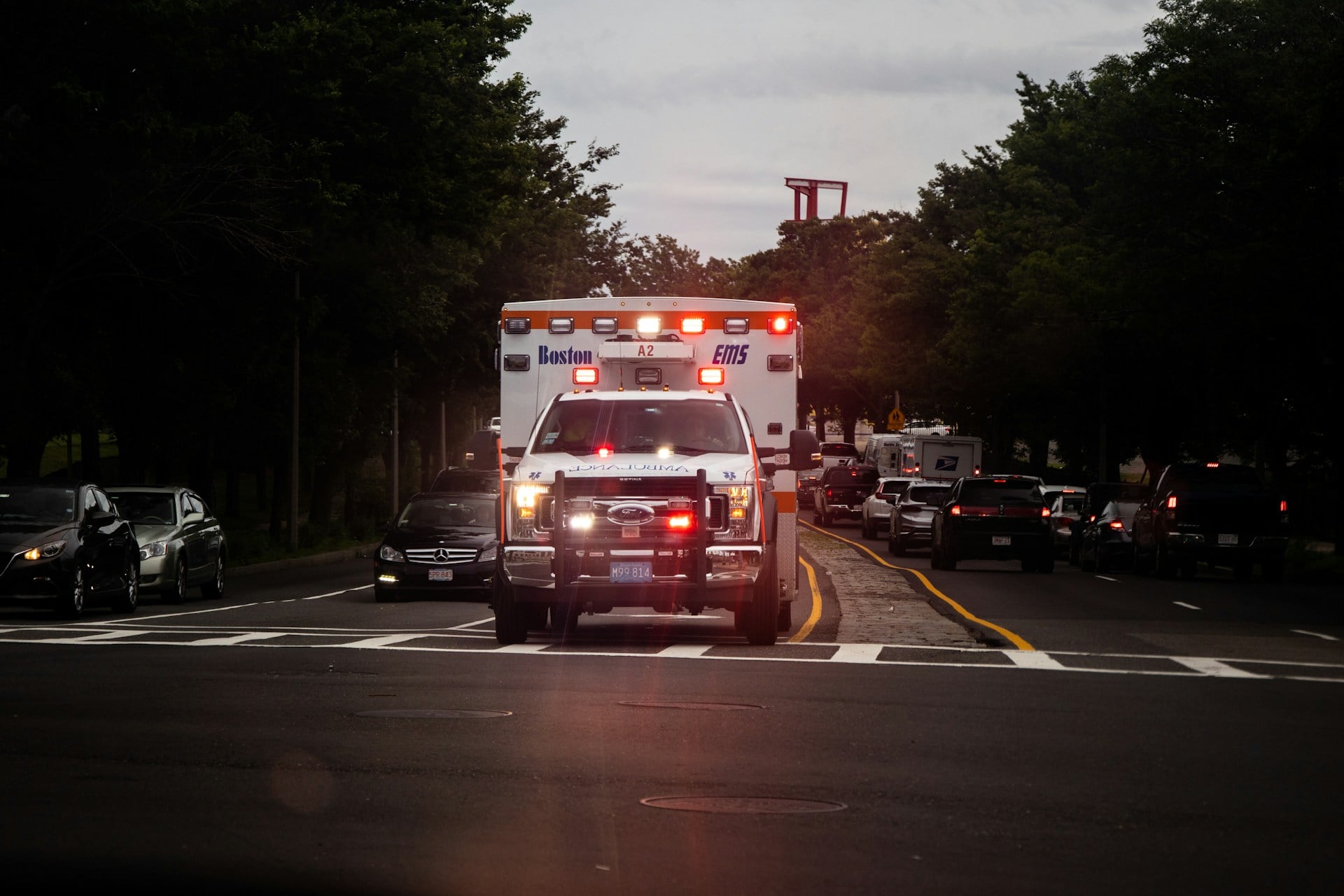
An ambulance. Image credit: Yassine Khalfalli via Unsplash, free license
Self-Driving Cars and First Responders
The head of the US National Highway Traffic Safety Administration says self-driving car companies must quickly fix a “clear pattern” of driverless vehicles interfering with law enforcement and other first responders. Administrator Jonathan Morrison laid out the demand in a letter to the industry on Wednesday, giving developers a short window to bring solutions to the table.
Key Takeaways
- NHTSA documented multiple cases of autonomous vehicles driving into active emergency scenes, blocking ambulances and firefighters, and failing to respond to flashing lights, flares, smoke, fire, and cones.
- Morrison called the failure a “functional insufficiency” and said an AV that cannot safely interact with first responders is “a danger to the general public.”
- The agency will hold meetings with developers by month’s end and did not name specific companies, though details point toward robotaxi operators such as Waymo.
Morrison wrote that the vehicles had driven into active emergency scenes and, in other cases, “blocked the paths of ambulances and firefighters, or failed to recognize and respond to basic safety conditions like flashing lights, flares, smoke, fire, and traffic cones.” He was blunt about the stakes: “Let me be clear: the inability to detect and appropriately respond to such situations represents a functional insufficiency.” The letter added that “an AV that cannot safely interact with first responders is a danger to the general public.”
NHTSA said it would schedule meetings with developers by the end of the month to gather fixes, and it called on operators to focus resources on the problem. The agency did not name any company or cite specific incidents in the letter.
The Waymo Pattern in the Background
Public reporting fills in the gaps the letter leaves open. Local media in Texas said a Waymo vehicle in Dallas in late May partly blocked a route firefighters were using to reach a burning apartment building. Other videos have reportedly shown Waymo cars blocking an ambulance and driving through an active police scene. Both NHTSA and the National Transportation Safety Board are separately investigating incidents involving Waymo vehicles, including cars that passed stopped school buses with lights activated in violation of Texas law.
The push arrives as driverless fleets scale into more cities and edge toward personal ownership. Waymo runs the largest US robotaxi operation, and Alphabet has floated extending its cars to private buyers. Rivals are racing in with different technical bets, from camera-first systems trained end to end to purpose-built vehicles without steering wheels. Every one of them now has to prove it can read a chaotic emergency scene, not just an ordinary street.
Regulators frame that as a baseline, not a bonus feature. TechCrunch has documented repeated run-ins between robotaxis and first responders, including officers who had to move stalled vehicles during emergencies. The agency itself stressed that emergency scenes are not rare edge cases, and paired the letter with progress on updated federal safety standards that would clear the way for vehicles built without traditional driver controls.
Written by Vytautas Valinskas
GIPHY App Key not set. Please check settings