

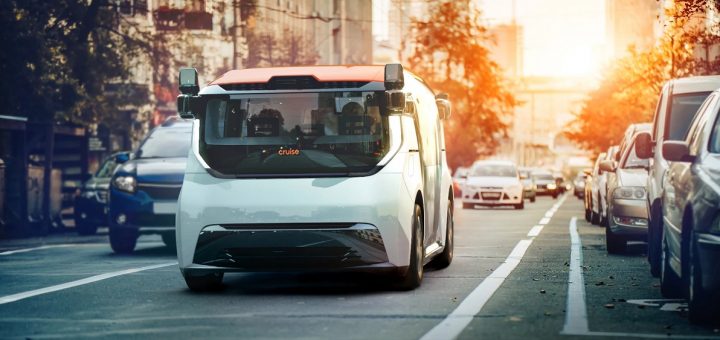
The value of the global autonomous vehicle market is set to increase to nearly $200 billion by 2030, says a new report from Strategic Market Research (SMR).
The report sees the value of the autonomous vehicle market increasing from $25 billion USD in 2021 to $197 billion, almost a 700 percent increase. The growth in value would come as autonomous vehicles become increasingly more viable, with automakers like General Motors Audi, Google, BMW, Ford, Tesla, Volkswagen, and Volvo making significant investments into the budding technology.
Within the autonomous vehicle market, SMR seem passenger vehicles dominating the segment, with transportation holding almost 94 percent of all application of the technology, while North America holding about 45 percent of global market share. The report cites two major reasons for this potential explosion of value.
First is the rise in smart cities. Electric autonomous vehicles help to reduce air pollution and fight climate change, says the report. Autonomous vehicles have been shown to reduce traffic accidents by an astonishing 90 percent, considerably enhancing road safety. Several countries, including the United States, are making vast investments into the necessary digital infrastructure, amplifying the connectivity between vehicles and the world around them. As a result, autonomous vehicles and smart cities are expected to grow hand-in-hand.
The second reason involves the adoption of new technologies in cars. Many automakers are developing autonomous vehicles by integrating cutting-edge technologies, including artificial intelligence and the Internet of Things. The ever-increasing demand for implementing these new technologies into vehicles is driven by a desire for increased customer safety and security. Additionally, the incorporation of AI-based cameras is increasing product demand and contributing to the expansion of the autonomous vehicle market.
GM’s portion of this potentially lucrative market will be held by its Super Cruise and upcoming Ultra Cruise autonomous driving assistants, as well as by Cruise, the automaker’s robotaxi division. While the first two technologies are aimed at aiding the driver in reaching their destination safely and in a more relaxed fashion, Cruise is focused on completely removing the human element in driving by providing a completely automated taxi. Currently, Cruise relies on human interference for less than one percent of driving time.
Nevertheless, even a relatively conservative ten percent share of the $200 billion forecasted value would give GM a $20 billion in additional annual revenue. GM expects roughly double that amount, sharing in October 2021 that it expects $50 billion in revenue from Cruise over the next couple of years. The robotaxi service has thus far missed all internal deadlines to launch publicly, though testing on public roads is ongoing.
Source: gmauthority.com