

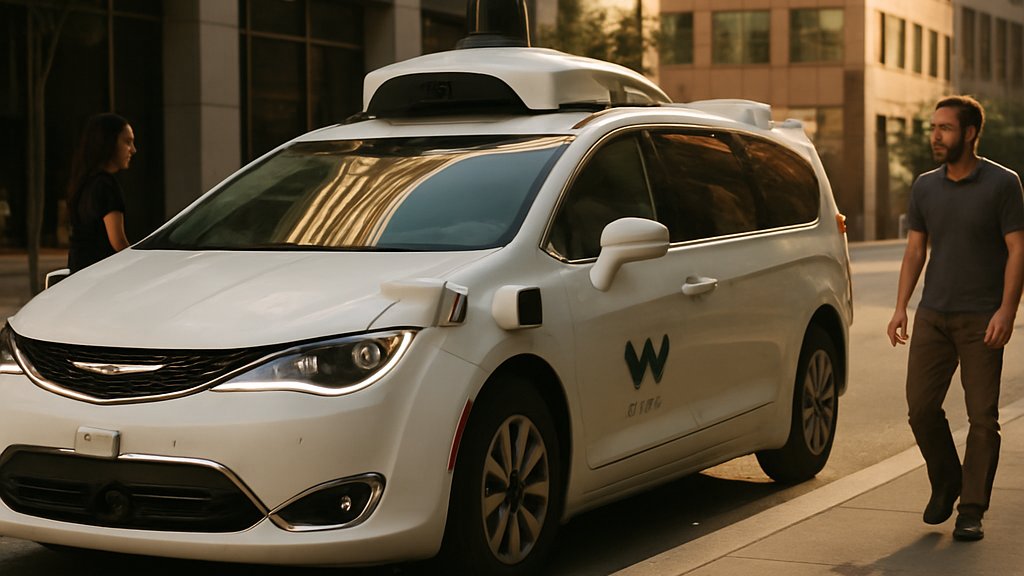
Furthermore, we examine why investors rushed in and what milestones Waymo must still clear. Finally, professionals will find resources, including a certification link, to deepen autonomous systems expertise. The scale of Waymo funding will influence policy agendas worldwide.
Waymo Funding Sets Benchmark
Industry insiders expected a large round, yet the final tally broke every autonomy record. Dragoneer, DST Global, and Sequoia led the Series A style raise despite Waymo’s late-stage maturity. Alphabet also injected fresh capital, retaining majority control while welcoming an unusually broad syndicate of mutual funds and sovereign investors. However, valuation headlines tell only part of the story.
- $16 billion total capital committed
- $126 billion post-money valuation
- 127 million autonomous miles logged
- 400,000 weekly rides across six metros
In fact, Waymo funding surpasses any Series A ever recorded in Silicon Valley. Consequently, Waymo funding equals roughly 69% of all 2025 private autonomous investment. S&P Global supplied that comparison. These figures underscore investor confidence. In summary, scale and valuation cement Waymo’s leadership. Nevertheless, expansion plans will test whether money converts to durable advantage. The following section maps those ambitious deployments.
Strategic Expansion Roadmap Ahead
Waymo intends to enter more than 20 additional cities during 2026, including London and Tokyo. Moreover, management promises to triple the robotaxi fleet, focusing on dense corridors and airport routes. Executives plan to allocate capital toward regional operations centres, cloud simulation farms, and hardware procurement. Alphabet executives reportedly support this aggressive cadence yet demand clear revenue milestones. Waymo claims 15 million rides during 2025 and projects steep growth once new markets open.
- 400,000 weekly rides today
- Target: one million weekly rides by Q4 2026
- International share expected to hit 25% within year one
Additionally, Waymo funding earmarks resources for localized mapping and policy outreach teams. These teams must secure regulatory approvals faster than competitors to preserve first-mover momentum. Rapid launches could cement network advantage. However, competition is intensifying, as the next section explains.
Competitive Landscape Shifts Quickly
Tesla, Amazon’s Zoox, Cruise, and Chinese operators all accelerated their fundraising after Waymo’s announcement. Consequently, S&P Global recorded $23.26 billion in sector transactions between January and April 2026. In contrast, 2025 saw only $10.18 billion, highlighting the catalytic effect. Investors perceive scale, data, and safety metrics as defensible moats within mobility AI. Nevertheless, some analysts argue that deep pockets alone cannot resolve difficult edge cases. Cruise still faces NHTSA probes, while Zoox battles limited geographic permits.
- Validated safety record
- Operational miles banked
- Partnerships with fleet OEMs
- Brand trust among riders
Moreover, Alphabet’s cloud infrastructure offers cost leverage unavailable to many challengers. Competition pushes technical progress forward. The following section reviews regulatory and safety hurdles that could slow everyone.
Regulatory And Safety Scrutiny
Waymo cites a 90% reduction in serious injury crashes versus humans. However, federal investigators are examining incidents involving school buses and a minor pedestrian injury. NHTSA and NTSB seek data transparency concerning failure modes within Level-4 systems. Meanwhile, some city councils pause permit renewals until public reporting improves. Waymo funding reserves include dedicated safety analytics staff and expanded engagement with policymakers. Additionally, independent academics request raw disengagement logs to validate company claims. Alphabet leadership states they will cooperate while protecting proprietary sensing intellectual property. These debates illustrate that perception management remains as crucial as engineering quality. In sum, regulatory clarity still lags technological capability. Consequently, investor confidence depends on continuous safety validation, explored further in the investment sentiment section.
Investor Sentiment And Impacts
Dragoneer partner Jared Middleman praised Waymo’s operating metrics and revenue trajectory. Sequoia’s Konstantine Buhler labeled the deal a generational mobility AI opportunity. DST Global echoed that view, citing repeat ridership and unit economics converging toward ride-hailing parity. Subsequently, later-stage private equity funds shifted allocations from delivery drones toward self-driving cars platforms. Series A specialists increasingly hunt for earlier autonomy bets, hoping to replicate outsized returns. Nevertheless, some hedge funds remain skeptical, pointing to unresolved regulatory risk and capital burn rates. Waymo funding reassures many allocators because Alphabet can continue backstopping liquidity if public markets cool. Consequently, IPO chatter is rising, though management offered no timeline. Investor mood appears buoyant yet cautious. The next section dives into the technology milestones underpinning that confidence.
Key Technical Milestones Explained
Waymo’s Level-4 stack, branded Waymo Driver, integrates lidar, radar, cameras, and fifth-generation compute boards. The company claims 127 million fully driverless miles, a record among self-driving cars programs. Moreover, simulation systems run 20 billion virtual miles daily, accelerating edge-case discovery. Alphabet engineers highlight a new reinforcement learning framework that shortens perception-planning loops.
- Redundant braking and steering actuators
- High-definition centimeter maps
- End-to-end neural networks with interpretability layers
Additionally, funds will scale custom sensors, lowering bill of materials by 30% within two years. Consequently, management believes positive unit economics arrive once weekly rides exceed one million. Professionals can deepen expertise through the AI Robotics Specialist™ certification. These milestones support the economical scaling thesis. Finally, we evaluate broader transport outcomes and policy shifts.
Future Outlook For Transport
Autonomous fleets could reshape urban transport patterns, reducing parking demand and emissions. Furthermore, ride access may expand for elderly and disabled citizens, addressing equity concerns. In contrast, labour groups fear driver displacement without adequate reskilling programs. Waymo funding enables international pilots that will test diverse road cultures and regulatory regimes. Moreover, successful launches could push governments toward harmonised standards, benefiting the entire mobility AI ecosystem.
Analysts predict a trillion-dollar total addressable market across self-driving cars and adjacent transport services by 2035. Nevertheless, execution risk remains high, as edge cases grow exponentially with geography. The coming decade will determine whether autonomy meets its social promises. Therefore, stakeholders must track policy, technology, and capital flows closely.
Waymo funding has redefined the financing bar for autonomous technology. Moreover, Alphabet now steers a $126 billion mobility AI powerhouse ready for global scale. Investors, regulators, and city planners will watch fleet performance metrics and public sentiment closely. Consequently, successful launches could accelerate unified policy frameworks and expanded self-driving cars adoption. Nevertheless, unresolved edge cases and social concerns remind stakeholders that progress is never guaranteed. Professionals seeking an edge should explore the AI Robotics Specialist™ certification to navigate forthcoming transport transformations. In closing, continued Waymo funding and disciplined execution will determine whether robotaxis shift mobility forever.
Disclaimer: Some content may be AI-generated or assisted and is provided ‘as is’ for informational purposes only, without warranties of accuracy or completeness, and does not imply endorsement or affiliation.