
 Moderation Team
Summary: China is projected to introduce 300,000 driverless cabs in its top four cities by 2030, driven by advancements in AI and the electric vehicle industry, according to Paul Gong of UBS. The robotaxi market could potentially reach $183 billion annually if all taxi and ride-hailing vehicles transition to autonomous models. While Gong noted the significant productivity benefits, he acknowledged uncertainty regarding full commercialization due to regulatory and consumer factors. HSBC estimates that robotaxis could capture 6% of the taxi market, initially exceeding $40 billion and generating additional revenue through logistics services, totaling $30 billion annually.
What’s the story
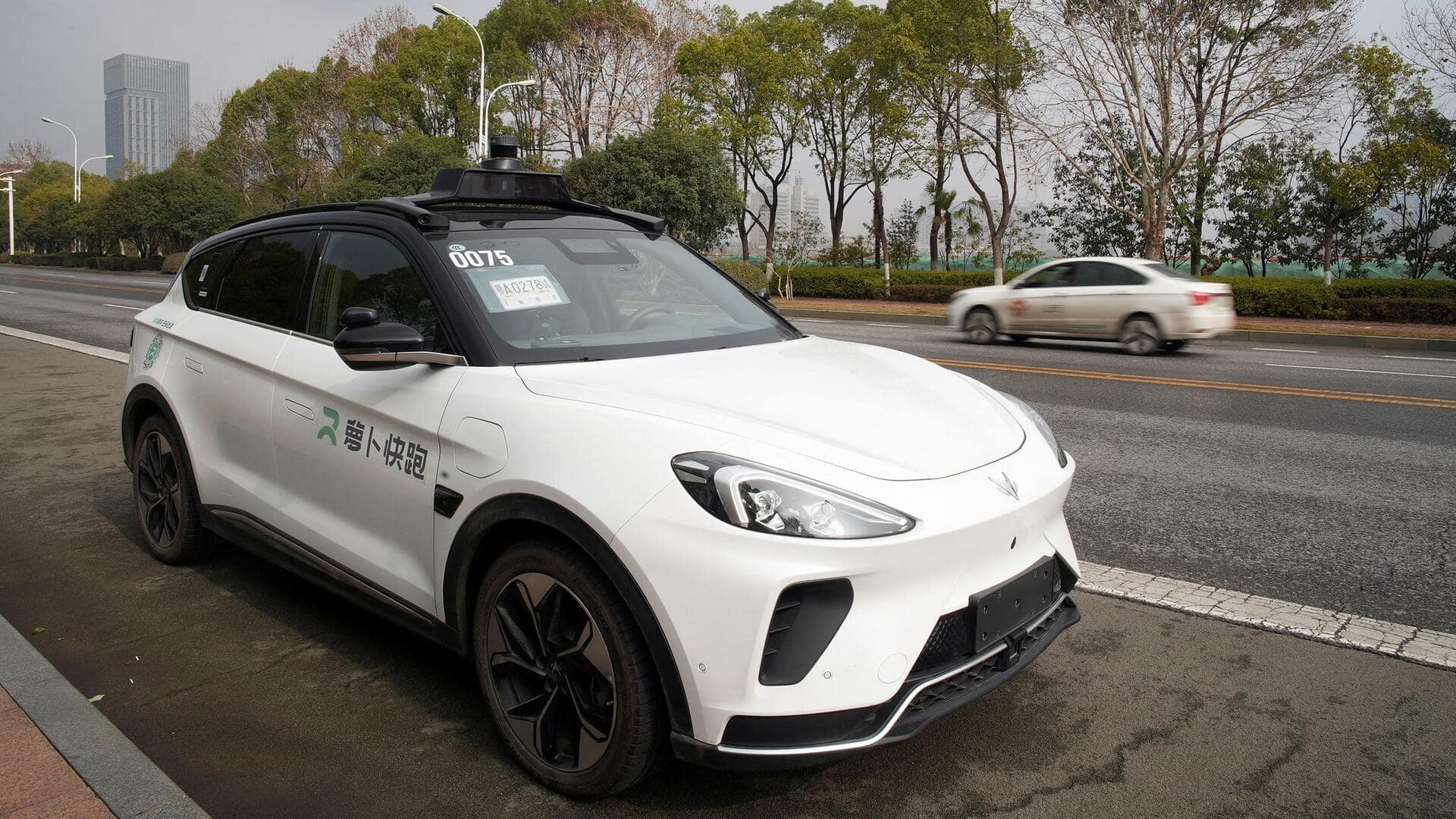
China is set to witness a major shift in its transportation sector with the introduction of 300,000 driverless cabs in its four top-tier cities by 2030.
The development comes as a result of advancements in artificial intelligence (AI) and the country’s highly competitive electric vehicle (EV) industry.
Paul Gong, head of China automotive research at UBS, has made this prediction.
Robotaxi market could be worth $183B annually
Gong also highlighted the huge potential of the robotaxi market in mainland China, which could be worth as much as $183 billion annually.
This would happen if all two million taxis and five million cars on ride-hailing platforms were replaced by driverless cabs.
He emphasized that autonomous vehicles would greatly improve productivity due to rapid technological advancements and rising labor costs.
Full commercialization timeline remains uncertain
However, Gong could not give a timeline for the full commercialization of the robotaxi business in mainland China, as it depends on regulations and customer reactions.
His optimistic prediction matches an HSBC estimate from last month that robotaxis would make up 6% of China’s total taxi market.
The bank estimated this market would exceed $40 billion annually at first, without specifying when local operators could reach this target.
Autonomous taxis could also provide logistics services
Apart from ferrying human passengers, autonomous taxis in mainland China could also generate an annual revenue of $30 billion by providing logistics and delivery services.
This was revealed by HSBC in a research report published on July 14.
Gong said the lower cost of building EVs with autonomous technologies is the biggest growth driver for expanding robotaxi fleets in mainland China.


GIPHY App Key not set. Please check settings