
 Moderation Team
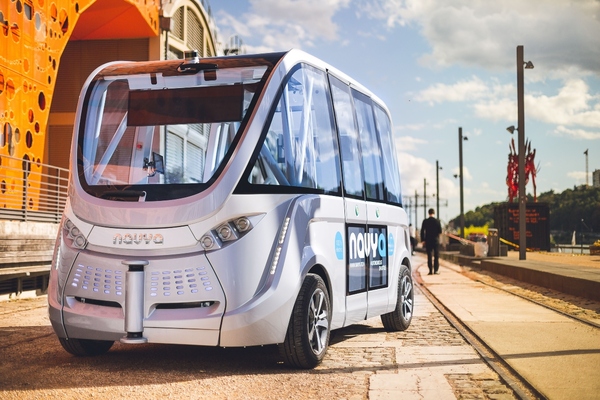
Navya’s shuttle, which will provides a shared, electric transport model for Saudi Arabia
The Ministry of Transport and Logistic Services of the Kingdom of Saudi Arabia has signed a memorandum of understanding (MoU) with Navya to support the implementation of autonomous vehicles in the kingdom.
The projects relate to the deployment of self-driving electric and shared shuttles for the transportation of people, together with electric tow tractors for the transportation of goods at airports and industrial sites.
Large-scale deployment
The agreement aims to implement pilot projects, validating use-cases, defining regulation, and building up local competencies in order to prepare and speed up the large-scale deployment of fleets of level 4 autonomous vehicles over the whole of the Arabian Peninsula. Saudi Arabia claims it will help support it to become one of the first markets in the world to deploy large shuttle fleets on its territory.
The carbon-free, shared fleets will play an essential role in the building of cities of the future, providing clean air and a better quality of life, in accordance with the Saudi Arabia’s Vision 2030, a strategic framework to reduce dependence on oil.
“Ecological and connected transportation will not only advance mobility, but also benefit the whole community. The agreement will bring us closer to achieving our vision of the mobility of the future on a large scale”
Navya, a provider of autonomous mobility systems and associated services, reports its share of the autonomous mobility market for people stands at 75 per cent in the Gulf Cooperation Countries, including six shuttles in operation in the kingdom.
“The Ministry of Transport and Logistic Services has a commitment to enable the adoption of new mobility and technologies across all modes, as part the Sector National Strategy to be a futuristic sector and a model of seamless mobility,” said Dr Mansour Alturki, Saudi deputy minister of planning and information.
He continued: “Such a collaboration with Navya, will allow for leading companies to support Saudi in ensuring the right and timely regulatory frameworks are in place to allow for wide-scale adoption in the future and early piloting of autonomous and connected transportation across the kingdom. Which will be essential to drive investments in the Saudi transport and logistics sector in new technologies and improve the quality of the mobility in Saudi cities.”
According to Navya, the final agreement, together with the support provided by Saudi Arabia, will enable it to take its research and development to a higher level with the development of new first- and last-mile use cases in town centres, smart cities, airports, theme parks and industrial sites.
“We look forward to the start of a fruitful collaboration with the Kingdom of Saudi Arabia to speed up the deployment of new fleets for people and goods and to contribute to the building of an autonomous and shared future,” added Sophie Desormière, CEO of Navya.
“Ecological and connected transportation will not only advance mobility, but also benefit the whole community. The agreement will bring us closer to achieving our vision of the mobility of the future on a large scale.”
Source: www.smartcitiesworld.net


GIPHY App Key not set. Please check settings