 Moderation Team
Summary
Investors and analysts are undervaluing Tesla by $30 billion due to a failure to understand deep learning.
Deep learning has already demonstrated a remarkable ability to make “intelligent” decisions, given abundant data to train on.
Tesla’s upcoming release of its new AI software and neural network architectures will likely move the stock upward.
Pricing in a reasonable amount of expected value for robotaxis could add $160 to Tesla’s share price.
The long-term opportunity for Tesla is even larger.
I believe the market is profoundly misjudging the competitive landscape in autonomous driving. Waymo (GOOG, GOOGL) has been awarded frontrunner status and recently attained a $30 billion valuation from private market investors. Meanwhile, it is difficult to find an investor or analyst who attributes even a dollar of value to Tesla (TSLA) for robotaxis. Does this discrepancy reflect a deep understanding of the underlying technology? I don’t believe so. While I’m not an expert, I’ve done extensive research and self-education on self-driving cars.
In this article, I’ll explain why if any company deserves a $30 billion valuation for robotaxis, it’s Tesla. I believe that as Tesla demonstrates more progress on autonomy following the upcoming release of a new, rewritten version of Autopilot, the market will begin to price in more expected value for robotaxis and for sales of partially autonomous software features. As a point of comparison, if $30 billion were added to Tesla’s market cap, with 184 million shares outstanding, the share price would increase by about $160.
Let’s start with the fundamentals. Self-driving cars need to do three things:
-
Perceive the environment.
-
Predict the future.
-
Plan actions.
In my opinion, the biggest advance in perception will come from mastering self-supervised learning on video. That means predicting parts of a video or a video frame from other parts of the video or the frame. This allows for scaling of deep learning unconstrained by human labour, which is required for hand-labelling large datasets of images and videos. In the future, hand-labelled datasets can fine-tune neural networks trained on oceanic amounts of unlabelled video. (Learn more here.)
According to some experts, research and development is needed to bring deep learning for prediction into a state of maturity. Deep learning for prediction is inherently self-supervised since the “ground truth” is the future, which can simply be observed by a car’s perception system. When the foundational R&D work is done, prediction will not be limited by hand labelling. Here’s an example from Tesla’s Autonomy Day:
Finally, in my view, the ability to plan actions will come from applying deep learning approaches to the problem (namely, imitation learning and deep reinforcement learning), rather than hand-coding solutions. That’s what this article is about.
With enough data, deep learning can achieve top percentile performance on tasks that are arguably as strategically and tactically complex as driving. My favourite example is DeepMind’s AlphaStar. In November, AlphaStar beat one of the world’s top StarCraft II players, Serral, who was the 2018 StarCraft world champion and a semi-finalist in 2019. In a series of unplanned, casual matches, Serral lost against AlphaStar 1-4. In online matches, AlphaStar was better than over 99.8% of human players. In Europe, it ranked in among the top 200 players, out of a pool of 125,000 competitors.
StarCraft is one of the most popular real-time strategy games. It’s like chess to the power of ten, with tests of reflexes and speed wrapped in. That’s why it’s been considered a grand AI challenge for a decade. In my view, AlphaStar demonstrates the sort of skills and intelligence that would be needed for action planning in a self-driving car. I’ve been playing StarCraft for a few months (originally as research for articles like this one) and I rank somewhere just above the bottom 25% of players in North America. In my personal human experience, StarCraft requires far more focus and brainpower than driving. I’m impressed by its seemingly endless layers of moves and countermoves and the room for creativity, wild gambits, and dirty tricks.
A professional StarCraft commentator, Artosis, made a series of videos analyzing the matches against Serral for people who don’t play StarCraft. These videos help convey the complexity, depth, and difficulty of StarCraft, as well as the (for lack of a better word) “intelligence” of AlphaStar’s decisions. Here’s Artosis’ introduction video:
Here’s Artosis commentating on the first match between Serral and AlphaStar:
When I draw comparisons between self-driving cars and AlphaStar, some folks give a knee-jerk dismissal. To them, it is silly to compare playing a video game to a serious, real-world task like driving. But driving simulators are taken seriously by every company working on self-driving cars and driving simulators are, essentially, video games. Even real self-driving cars driving around in the real world need internal digital representations of the world, which are like an internal, real time “simulation” of their surroundings.
It’s not important whether a goal is arbitrary and invented like winning a StarCraft match or practical and century-old like driving to a destination. What matters is the difficulty of the task for AI. The degree of success AI achieves in science projects involving games can serve as a yardstick for how well we can expect AI to perform on real world, practical tasks like driving cars.
-
The perception problem is abstracted away.
-
Abundant data on human behaviour can sometimes be obtained from the Internet (e.g. over 300,000 people play StarCraft online).
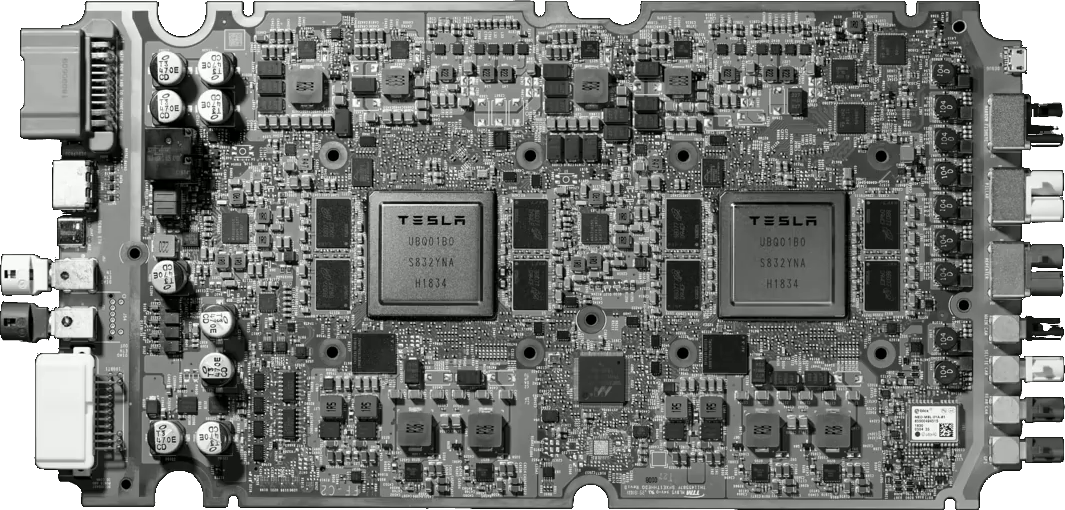
I briefly touched on perception at the beginning of the article. As for data on human behaviour, there seems to be no substitute for abundant real-world human driving data. While self-driving car prototypes number around 1,400 in the U.S., Tesla’s fleet of cars with autonomy hardware currently sits around 800,000. Given an average of one hour of driving per day, that’s about a century of continuous driving per day across Tesla’s fleet.
I believe data at this scale will prove to be necessary to solve autonomous driving. The version of AlphaStar that defeated Serral, for instance, trained on many millennia of experience. To drive for even one millennium continuously, a fleet of 600 prototype robotaxis like Waymo’s must drive for 12 hours per day every day for over three years.
This compilation of clips from Tesla’s Autonomy Day shows how neural networks can learn to plan actions from human driving behaviour:
In the realm of planning actions, as well in predicting the future and in self-supervised learning approaches to perception, the performance of neural networks scales with data. We can call this a law of deep learning. If the market understood the laws of deep learning, it would attribute more value to Tesla than Waymo for robotaxis.
Tesla’s fundamental rewrite of its AI software is coming out soon. I believe this will be a significant catalyst for Tesla’s stock price. Tesla is preparing to deploy new neural network architectures called HydraNets that have been in development since 2017. Tesla’s Senior Director of AI, Andrej Karpathy, explains this new generation of neural networks in this talk:
With Waymo already offering passengers rides without safety drivers, and with companies like Cruise (GM) and Zoox claiming that their autonomous vehicles are either already above or will soon surpass human-level safety, we should take the prospect of robotaxis seriously. I don’t believe robotaxis are a foregone conclusion. Yet it also seems wrong to dismiss them as a realistic possibility, given the evidence we have today. Investors and analysts should do more research to understand the laws and principles of deep learning and should do more work to explicitly model the commercial opportunities in autonomous driving, such as robotaxis and autonomous cargo transport. In my view, Tesla’s autonomy opportunity is being radically underpriced.
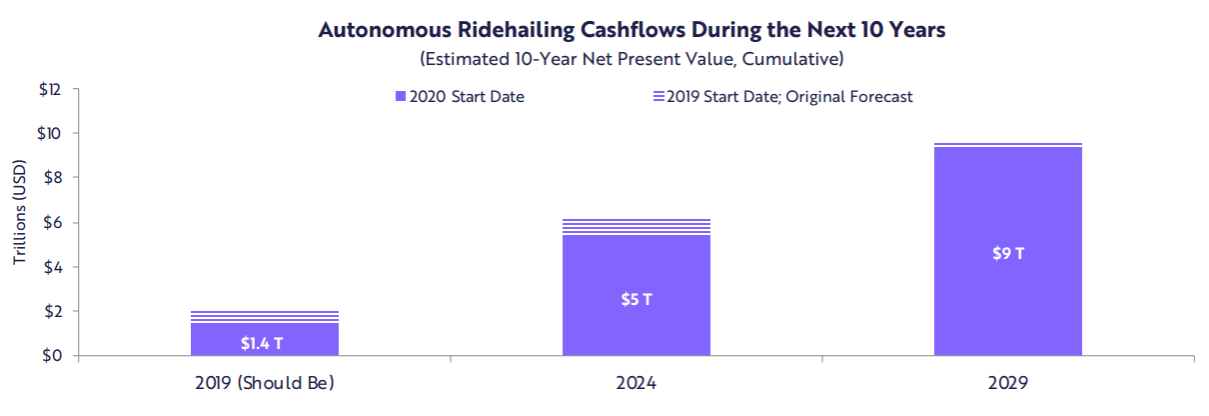
Long-term, robotaxis are one of the largest opportunities, if not the largest, in the public markets. For investors with a 5-year or 10-year time horizon, a high risk tolerance, and a strong conviction in the underlying technology, robotaxi stocks are worth serious research and analysis. Buy-side analysts at ARK Invest project that, collectively, robotaxi companies will be worth trillions:
Disclosure: I am/we are long TSLA. I wrote this article myself, and it expresses my own opinions. I am not receiving compensation for it (other than from Seeking Alpha). I have no business relationship with any company whose stock is mentioned in this article.
Source: seekingalpha.com
GIPHY App Key not set. Please check settings