
 Moderation Team
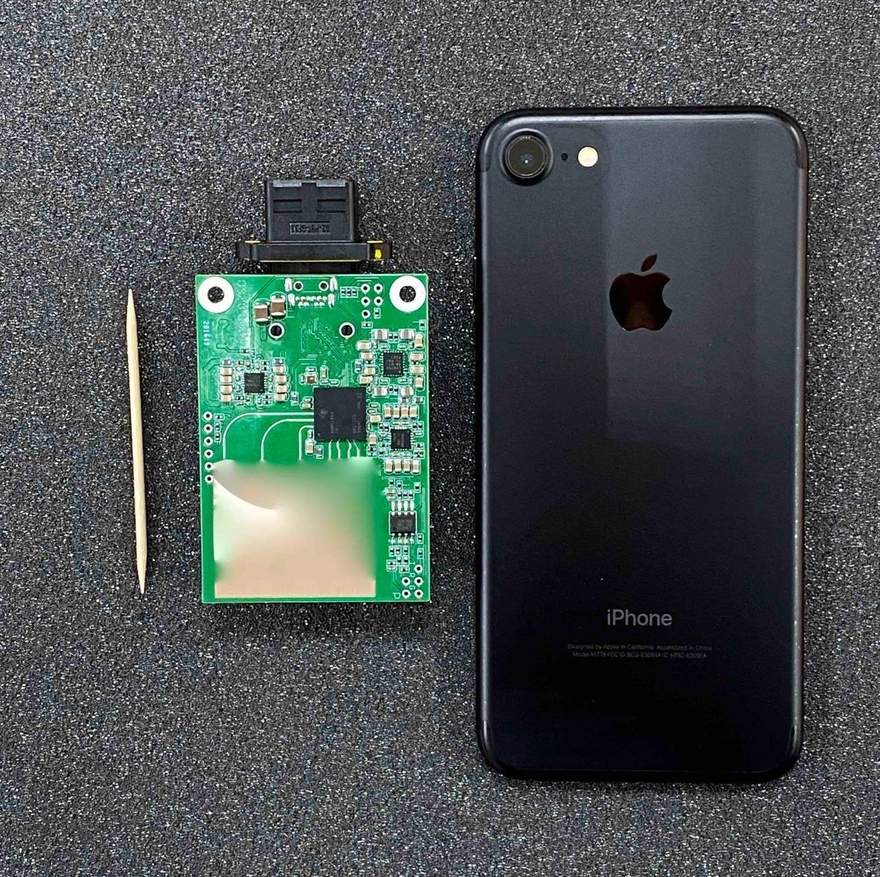
Cognitive Pilot, an autonomous driving technology joint venture of Russia’s Sberbank and Cognitive Technologies group, has developed a miniature radar sensor for autonomous vehicles that weighs just 40 grams and is no larger than a toothpick.
The sensor operates between 77 to 81 GHz or 60 to 64 GHz, depending on the model, and operates at distances up to 100 meters. While the sensor is designed primarily to control the space around a vehicle’s perimeter, it can also be used to solve other robotic technology issues and can be installed on multicopters.
“We’re developing our own line of sensors for autonomous vehicles, and now we are happy to present our new unique radar designed for mass production. It’s very reasonably priced (several tens of dollars), miniature in size, and it’s designed for a very wide class of tasks,” said CEO of Cognitive Pilot Olga Uskova.
North America’s can’t-miss event dedicated to sensors, connectivity, and IoT will take place this June 22-24 in San Jose, CA. Attendees can make connections, collaborate with experts & peers, get insight into emerging technology & trends, and find new approaches to evergreen challenges. Use promo code FE100 for $100 off Conference Passes.
According to the company, Cognitive Mini Radar is able to give accurate velocities, direction and coordinates of road scene objects in any weather conditions (rain, fog, snow) and at any time of day or night.
Cognitive Pilot is in the pre-industrial stage of production preparation. The first clients to use the new Cognitive Mini Radar include Russian transport organizations, international car manufacturers and suppliers of OEM components.
“We’ve been contacted by some manufacturers of integral security systems regarding the use of our radar for restricting people’s access to certain areas, warning about approaching hazardous objects, controlling the distance between people and other objects during the coronavirus epidemic,” said Uskova. “We already have pre-orders for solving these tasks from several clients in the U.S. and Europe. In the coming weeks we plan to send them prototypes of our radar for testing.”
Source: www.fierceelectronics.com


GIPHY App Key not set. Please check settings