 Moderation Team

Tesla recently hit the news for purchasing approximately $2M in LiDAR sensors from Luminar, one of Tesla’s long-term suppliers. You’ve probably seen photos of Tesla’s Semi and various Tesla models, including the Model 3 and Model Y sporting LIDAR equipment on the roof. These cars drive around with manufacturer plates scanning streets and highways.
However, many people confuse Tesla’s purpose in purchasing LiDAR equipment with using it for FSD versus testing. So, let’s look at what LiDAR is, and why Tesla uses it on its Fleet Validation Vehicles.
What is LiDAR?
LiDAR stands for Light Detecting and Ranging – essentially using lasers to measure distances. A laser pulse is sent out, and the time it takes to return is measured – providing extremely accurate distance measurements.
Some companies working on self-driving vehicles, including Waymo and BYD, use LiDAR as part of their self-driving suites, but Tesla is one of the few stand-outs that does not. Even Rimac’s “Verne” Robotaxi – which uses self-driving technology from Mobileye, also uses LiDAR.
While LiDAR can produce extremely accurate and high-quality 3D environments, it comes with its downsides as well. Not only is LiDAR costly and requires large gear strapped to a vehicle, but it also can not be used in bad weather and can have interference issues if there are other strong light sources present.
Why Does Tesla Use LiDAR?
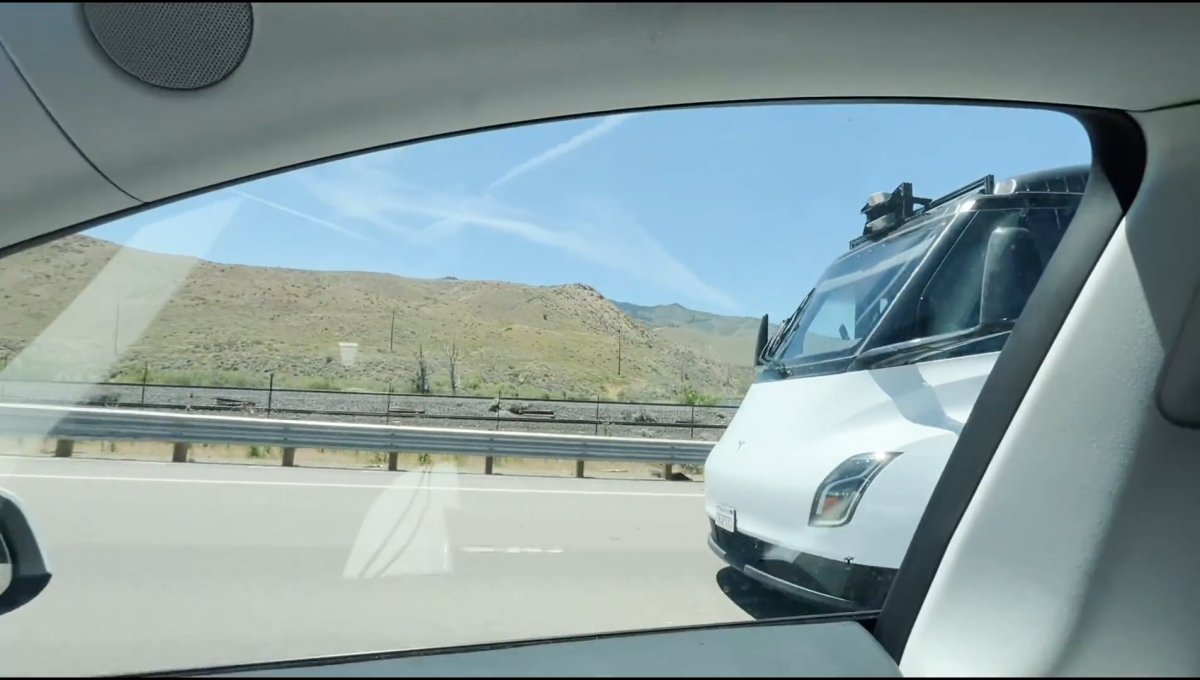
At Autonomy Day in 2019, Elon Musk mentioned that LiDAR isn’t the solution for self-driving cars – it’s just a crutch. Thus, Tesla hasn’t used LiDAR for any production self-driving software.
Instead, Tesla uses it exactly how it’s described – they use it to gather ground-truth data. This data is then used to feed Tesla’s Full Self Driving system – which helps validate its vision-only system’s accuracy. LiDAR provides very accurate measurements to help ensure that FSD’s perception of space is accurate – and is only used by Tesla to ensure that its AI technology which is the brains of FSD is capable of accurately interpreting depth from just visual data.
Tesla’s vision-only system has been seen to be extremely accurate, with Vision-only Autopark being able to park in even narrower and tighter spaces faster than the previous version that relied on ultrasonic sensors.
We’ll likely continue to see Tesla purchase LiDAR systems, as well as use them for validation well into the future.
Source: www.notateslaapp.com


GIPHY App Key not set. Please check settings